
Pleated vs Melt-Blown vs String-Wound: Cartridge Comparison 2026
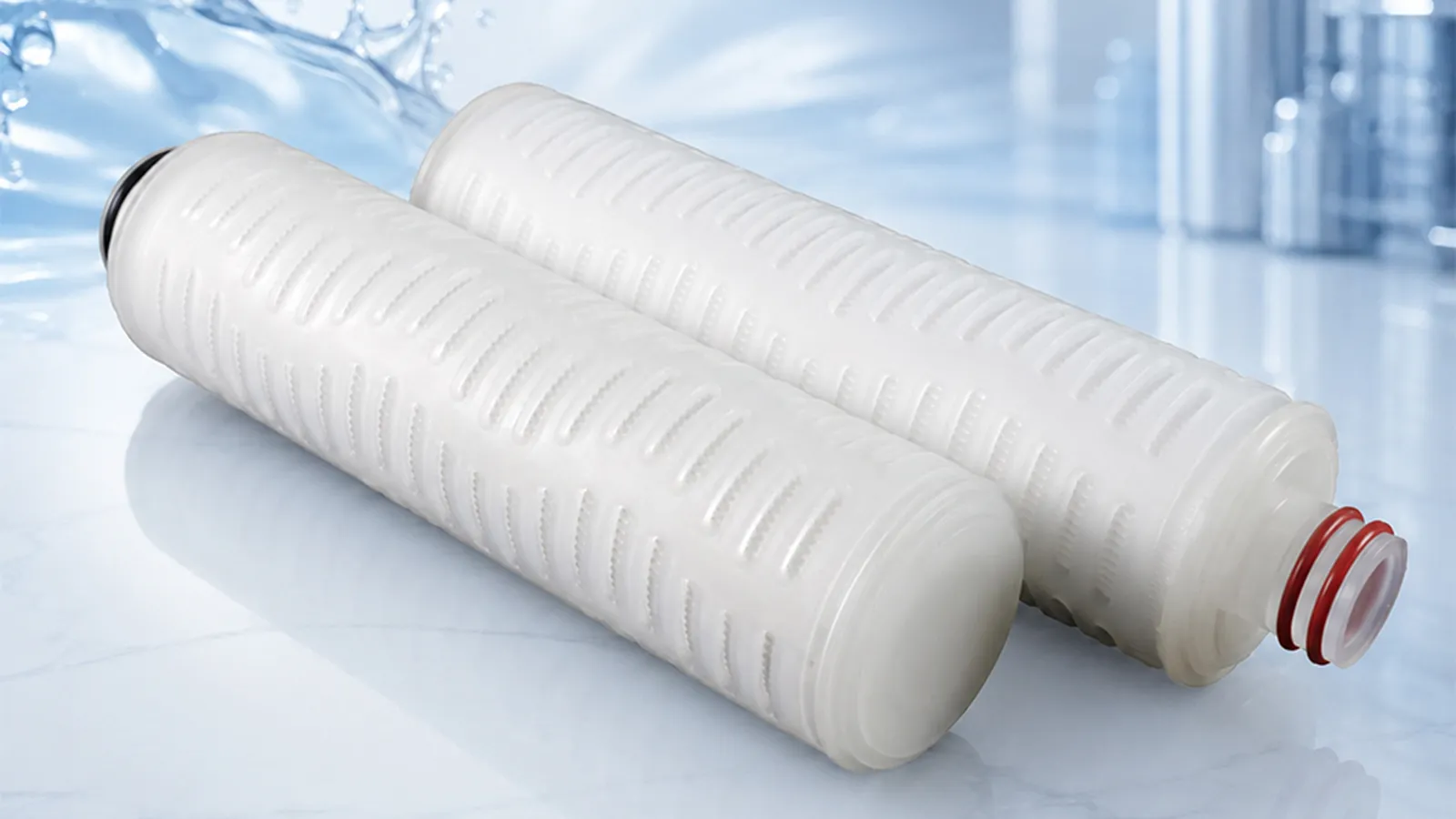
Table of Contents
A paint line in Ohio switched from pleated to melt-blown cartridges to save on unit cost. Six weeks later its differential pressure gauge sat 14 psi above the clean reading. The feed pump cavitated, and the line lost a full shift to an emergency change-out. The 40% price saving on media disappeared inside the first quarter.
Pleated, melt-blown and string-wound cartridges cover most industrial filtration. Buyers compare a string wound filter with a melt blown filter, or ask whether pleated filter cartridges justify their price. This guide puts the three technologies side by side on micron rating, pressure drop, dirt holding, service life and cost. Keep reading for more!
Key Facts at a Glance
- Definition — Pleated media is folded fabric; melt-blown media is blown polypropylene fiber; string-wound media is yarn wrapped on a core.
- Ratings — Pleated cartridges reach absolute ratings; melt-blown and string-wound media are nominal.
- Surface area — A 10-inch pleated element packs 5 to 8 ft² of media; depth media fits less per housing.
- Dirt holding — Melt-blown and string-wound designs hold more dirt per cartridge before plugging.
- Pressure drop — Pleated media starts lowest; depth media climbs faster near end of life.
- Cost — String-wound is cheapest per unit; pleated often wins on cost per year.
Three Technologies, One Job
All three cartridge types do the same job. They remove solid particles from a fluid stream before the fluid reaches expensive equipment. The differences lie in how the media is made, how much dirt it holds, and how precisely it cuts.
A pleated filter folds flat media into accordion pleats around a core. That fold multiplies surface area inside the same housing. More area means lower resistance and longer life at a given rating. Pleated filters are the default where precision matters, from hydraulic oil to final water polishing.
A melt blown filter extrudes molten polypropylene into fine fibers. The fibers land on a rotating collector and form a self-bonding depth matrix. Melt blown filter cartridges dominate water pre-filtration and reverse osmosis protection.
A string wound filter spins yarn around a perforated core. Winding tension controls the density, and the yarn builds a depth gradient from coarse to fine. String wound filter cartridges are the economy depth option for sediment-heavy water.
A plant that needs 10 micron absolute should not be looking at depth media at all. A line filtering river water with heavy suspended solids should not buy fine pleated elements for the same duty. Match the technology to the failure you fear most: precision loss or plugging.
Choose by duty, not by habit. Fine filtration wants pleated media. High dirt volume wants depth media. The rest of this guide quantifies the trade-offs with numbers you can carry into a spec sheet.
How Each Filter Is Built
1. Pleated construction
Pleated media starts as a flat sheet, often polyester, polypropylene, cellulose or glass fiber. A pleating machine folds the sheet into uniform pleats, typically 40 to 120 pleats per 10-inch element (typical). The folded cylinder is bonded to end caps and often wrapped with a coarse outer layer for pre-filtration.
Pleated cartridges can carry a precise removal rating. Glass-fiber pleated media is tested per ISO 16889 and quoted with a beta ratio. That makes pleated construction the standard for hydraulic and lubrication systems where a single oversized particle can score a pump.
2. Melt-blown depth media
Melt-blown media is spun from polypropylene resin in one continuous process. Fiber diameter runs from about 1 to 10 micron (typical), and pore size is graded from coarse on the outside to fine on the inside. The gradient traps big particles first, then smaller ones deeper in the wall.
A melt blown cartridge builds that graded structure in a single pass. There is no binder and no resin, so the media is chemically compatible with most water and chemical streams. A pure melt blown polypropylene filter cartridge contains nothing that can leach into the fluid.
3. String-wound yarn media
String-wound cartridges wrap yarn around a perforated core at controlled tension. Looser wraps on the outside catch coarse sediment; tighter wraps near the core catch finer particles. Cotton, polypropylene and polyester yarns cover different chemical duties.
A cotton string wound filter cartridge handles 10 to 100 micron sediment at the lowest cost per unit. The trade-off is a nominal rating: string-wound media removes "most" particles above a size, with no efficiency guarantee.
4. End caps, cores and seals
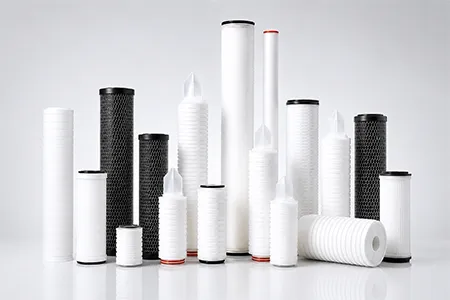
All three designs share the same hardware. A perforated core carries the media, end caps close the ends, and an O-ring seals against the housing. Polypropylene caps suit water and chemicals; galvanized steel caps suit oil and higher pressure. Seal geometry matters as much as the media, because a damaged O-ring bypasses the whole element.
| Feature | Pleated | Melt-blown | String-wound |
|---|---|---|---|
| Construction | Folded flat sheet | Blown fiber matrix | Yarn wound on core |
| Media material | Polyester, PP, cellulose, glass fiber | Polypropylene | Cotton, PP, polyester yarn |
| Removal mechanism | Surface plus depth | Depth (graded pores) | Depth (winding density) |
| Rating type | Nominal or absolute | Nominal | Nominal |
| Typical range | 0.1 – 100 micron | 0.5 – 100 micron | 1 – 100+ micron |
Surface Area & Media Density
Surface area is the quiet driver of filter performance. A 10-inch pleated element folds 5 to 8 square feet of media into a housing that a flat sheet could never fill. That same housing holds far less active area in depth form.
Melt-blown and string-wound media compensate with thickness. A melt-blown wall of 0.5 to 1 inch traps particles through its full depth. String-wound media does the same with many yarn layers. The pleated vs non pleated filters comparison starts right here: surface area versus media depth.
In intake duty, the pleated vs non pleated air filters choice also shifts clean pressure drop. Pleated air media runs a lower initial pressure drop at the same flow, which saves fan energy over a long campaign.
Compare pleated vs fiberglass filters and the same logic appears. Pleated polyester gives high area; fiberglass depth media gives high holding. Neither is universally better, which is why plants stock both.
Pleat count changes the math. A 10-inch element with 60 pleats holds less media than one with 110 pleats of the same depth (typical). More pleats lower pressure drop but add cost. Pleat depth and spacing also set how easily dirt releases during backwashing, which matters for dust collector pleated filter duty.
Micron Ratings: Precision Compared
A micron is one-millionth of a meter. A human hair is about 70 to 100 micron thick, and the particles that damage hydraulic pumps sit in the 3 to 15 micron range. Rating numbers only mean something when the test method is stated.
Nominal rating means the media removes most particles above a stated size. Absolute rating caps the largest pore at that size. Pleated cartridges can carry absolute ratings; depth media is almost always nominal. If a sheet does not say which applies, ask.
A PP melt blown filter cartridge is typically rated 1 to 50 micron nominal (typical). A pleated filter water application usually runs 1 to 25 micron with a stated efficiency. Most 10-inch water units fall into the nominal depth pleated filter cartridges class, rated 5 to 50 micron.
For pleated filter water applications, polyester media resists moisture best and holds a stable rating. Leading pleated filter manufacturers publish surface area per 10-inch element so you can compare across brands.
Rating consistency matters across batches. Depth media can vary in density from run to run, so two melt-blown cartridges from different lots may cut differently. Pleated media folds from a controlled sheet, which keeps lot-to-lot variance lower. Ask for test data before you standardize on any brand.
| Metric | Pleated | Melt-blown | String-wound |
|---|---|---|---|
| Typical rating range | 0.1 – 100 micron | 0.5 – 100 micron | 1 – 100+ micron |
| Rating precision | Nominal or absolute (beta-rated) | Nominal | Nominal |
| Efficiency test | ISO 16889 possible | Dirt capacity test | Dirt capacity test |
| Clean pressure drop (10-inch, typical) | 1 – 2 psi | 2 – 4 psi | 2 – 5 psi |
| Change-out threshold | 10 – 15 psi rise (typical) | 10 – 15 psi rise (typical) | 10 – 15 psi rise (typical) |
Pressure Drop & Flow Resistance
Pressure drop is the resistance the cartridge adds to flow. Every element starts clean and rises as dirt loads. The clean number matters for pump sizing; the rise rate decides how often you change.
Pleated media starts lowest because surface area spreads the flow. At rated flow, a clean 10-inch pleated element typically runs 1 to 2 psi. Melt-blown and string-wound elements typically start at 2 to 5 psi and climb faster as depth pores fill.
Run a depth cartridge past its limit and the wall compresses. The melt blown cartridge collapses, or the yarn unwinds and dumps trapped dirt downstream. Change on the differential pressure gauge, not on the calendar alone.
The common threshold is 10 to 15 psi above the clean reading (typical). Below that, an element still protects the system. Beyond it, every hour risks a burst or bypass event.
Flow rate sets the pressure drop story. Double the flow through the same cartridge and pressure drop roughly quadruples (typical). Oversized housings waste money; undersized ones starve the system. Match the element to the rated flow of the housing, and confirm the clean delta P against your pump curve before ordering volume.
Dirt-Holding Capacity
Dirt holding is the total weight of particles a cartridge can retain before plugging. Depth media wins this contest outright. Melt blown filters load gradually as graded pores fill from the outside in. String wound cartridge filters do the same with winding layers.
Typical 10-inch capacities give the scale. A pleated element holds roughly 150 to 300 grams before pressure drop spikes (typical). A melt-blown element holds 250 to 500 grams (typical). A string-wound element sits in the same range at lower unit cost.
That extra holding matters in high-sediment water. String wound water filters handle sand and rust in municipal lines. String wound water filter cartridges suit high-sediment wells, where pleated media would plug in weeks.
| Capacity & life | Pleated | Melt-blown | String-wound |
|---|---|---|---|
| Dirt holding per 10-inch (typical) | 150 – 300 g | 250 – 500 g | 250 – 500 g |
| Water service interval (typical) | 6 – 12 months | 3 – 6 months | 2 – 4 months |
| Oil and hydraulic interval (typical) | 500 – 1,000 h | Not typical | Not typical |
| End-of-life behavior | Surface cake and delta P rise | Wall compression | Yarn unwinding risk |
Dirt holding is not free. Depth media pays for capacity with higher pressure drop and a less precise cut. The dirt-holding number should be read together with the rating, never alone.
Service Life & Change Intervals
Service life follows from surface area and dirt holding, plus the particle load of the fluid. The same cartridge lasts months on a clean line and days on a dirty one.
In water service with moderate sediment, a pleated element typically runs 6 to 12 months. Melt blown filter cartridges typically last 3 to 6 months. String wound water filters typically change every 2 to 4 months. In hydraulic oil, pleated glass-fiber elements run 500 to 1,000 operating hours (typical).
The string wound vs pleated water filters decision comes down to sediment load. Low dirt means pleated wins on interval length. High dirt means the cheap string-wound element wins on cost per change. String wound filters trap particles through yarn depth, which suits sediment but not precision.
The cheapest change policy is a fixed interval plus a pressure-drop check. The most expensive is replacement after failure. A differential pressure gauge costs little and prevents collapsed elements and early discards. Log the clean reading on every new element, then change at 10 to 15 psi above it.
American melt blown suppliers quote nominal ratings and capacity numbers, so compare on dirt-holding grams rather than micron claims alone. Whatever the interval, verify it with a differential pressure gauge.
Cost per Change & Total Cost
Unit price is the number buyers see first, and it is the worst number to optimize alone. The correct metric is cost per year, which combines unit price, change frequency and disposal.
String-wound media is the cheapest to make. A 10-inch string-wound cartridge typically costs 30 to 50% less than a pleated cartridge of similar rating. Melt-blown sits between the two, typically 15 to 30% above string-wound (typical).
The melt blown polypropylene filter market skews toward 1 to 50 micron nominal duty. The string wound filter material market splits among cotton, polypropylene and polyester yarns, each with a different price point.
| Cost factor | Pleated | Melt-blown | String-wound |
|---|---|---|---|
| Unit cost (10-inch, typical) | Highest (index 100) | Medium (index 60 – 75) | Lowest (index 45 – 60) |
| Change interval | Longest | Medium | Shortest |
| Disposal volume | Lowest | Medium | High (yarn mass) |
| Best total-cost case | Fine, low-dirt duty | High-dirt water | Very high sediment |
| Worst-case risk | Over-spec cost | Early plugging | Bypass at rating |
Work a simple example. A pleated cartridge at index 100 lasts 8 months. A string-wound cartridge at index 55 lasts 3 months. Annual spend for pleated media is 150 units; for string-wound it is 220 units including labor. The pleated element wins on cost per year despite the higher tag price.
Add labor and downtime to the math. Every extra change costs maintenance time and production risk, so interval length often outweighs unit price.
Disposal adds a line to the ledger. Depth media carries more polymer mass to the landfill or incinerator, and yarn cartridges are bulky. Pleated elements generate the least disposal volume per year because they change least often. Ask about recycling programs, since some polypropylene cartridges can be granulated and reprocessed.
Applications by Industry
Each technology has a natural home. The pattern below matches media to duty across the common industries.
- Water pre-filtration — melt-blown depth media, 1 to 50 micron, ahead of RO and polishing loops.
- Well and borehole water — string-wound media for sand, rust and silt at 10 to 100 micron.
- Hydraulic systems — pleated glass-fiber media, beta-rated per ISO 16889.
- Air compressor intake — pleated air filters, with a non-pleated pre-filter in dusty sites.
- Food and beverage — food-grade pleated polyester or melt-blown polypropylene.
- Chemical processing — polypropylene melt-blown for aggressive fluids.
- Dust collection — a dust collector pleated filter cartridge in pulse-jet housings.
- Paint and coolant — string-wound or melt-blown where dirt volume is the problem.
Pleated filter bags add pleated media to a bag format. A pleated filter bag bridges the gap between bag-change speed and cartridge surface area, useful in paint and coolant loops.
If your fluid is liquid and your rating sits between 0.5 and 100 micron, our liquid filter cartridge range covers all three constructions. Matching housings are listed on the product page.
Whatever the technology, the housing decides the fit. Confirm outer diameter, inner diameter, length and seal before ordering. A cartridge that fits loosely bypasses unfiltered fluid, and a tight one can crack an end cap on installation. Our filter housings page covers the matching housings for each construction.
Pleated vs Non-Pleated Debate
The pleated vs non pleated filters question is really a surface-area question. A pleated filter concentrates media area; a non pleated filter relies entirely on depth media. Each answers a different failure mode.
Pleated wins where precision and interval matter. It holds a stable rating, starts at lower pressure drop, and changes less often. Depth media wins where dirt volume is huge and rating can stay loose.
Many plants run both in series. A depth stage catches the bulk of the dirt cheaply. A pleated stage downstream protects the equipment precisely. Two-stage rigs typically cut annual filter spend by 20 to 35% versus a single fine element (typical).
The non pleated filter still holds the cost crown per unit. But the debate should end with your differential pressure gauge, not with the catalog price.
Try the two-stage math on a real line. A 50-micron string-wound pre-filter catches the sand for pennies. A 5-micron pleated guard downstream protects the pump for months. The pair usually costs less per year than a single fine element fighting the whole dirt load. Stage the filtration and both technologies earn their place.
Selection Decision Table
Use the table below to shortlist a technology. Match your fluid and your dirt condition to a row, then confirm dimensions and rating with your supplier.
| Fluid & condition | Recommended technology | Typical rating | Why |
|---|---|---|---|
| Drinking water, low sediment | Pleated polyester | 1 – 25 micron | Long interval, stable rating |
| Well water, heavy sand | String-wound | 20 – 50 micron | Cheapest high holding |
| RO pre-filtration | Melt-blown then pleated | 5 micron + 1 micron | Graded protection for the membrane |
| Hydraulic oil | Pleated glass fiber | 3 – 25 micron | Beta-rated precision |
| Coolant with metal fines | Pleated or melt-blown | 10 – 50 micron | Dirt load decides |
| Air intake, dusty site | Pleated + non-pleated pre-filter | 1 – 10 micron | Low drop, staged protection |
| Aggressive chemicals | Melt-blown polypropylene | 1 – 50 micron | No binder, full compatibility |
| Food & beverage final | Food-grade pleated polyester | 1 – 10 micron | FDA-style compliance expected |
When two rows fit your case, run the cost math from the earlier section. Then order one sample of each and measure pressure drop rise in service. The gauge settles the argument faster than any spec sheet.
Sample first. Install one element of the shortlisted technology and watch the pressure drop for two weeks. Measure cleanliness with a particle counter if you have one. The sample reveals the real interval, and the real interval drives the real cost.
The Bottom Line
Pleated, melt-blown and string-wound cartridges are not competitors; they are tools for different jobs. Pleated media wins on precision, pressure drop and interval length. Melt-blown and string-wound media win on dirt holding and unit cost.
Pick the technology by fluid and dirt load, not by habit. Confirm the rating is nominal or absolute, and check the clean pressure drop against your pump curve. Change on the differential pressure gauge, and run the cost-per-year math before you commit to volume.
PLEATPURE manufactures pleated, melt-blown and string-wound cartridges factory-direct, with housings and cross-brand interchange fit. Every element is checked for dimension, seal and media integrity before shipping. Browse our liquid filter cartridges or send your old element dimensions for a cross-reference quote.
NEXT STEP
Ready to Switch to Replacement Filter Cartridges?
Send us your element dimensions or part numbers — our team responds within 24 hours with pricing and lead time.
Written by
Ray ChanFiltration Buyer's Guide Author · Industrial Filter Cartridge Specialist. Ray helps global importers, distributors and maintenance teams source factory-direct replacement filter cartridges.