
Filter Bag Guide 2026: Complete Selection Manual

Table of Contents
A torn filter bag shut down a paint line for a full shift last spring. The seam let go at the top of the cycle, and pigment packed every nozzle downstream. The rework bill exceeded the plant's entire annual filter budget. All of it traced back to one undersized liquid filter bag. Nobody checked the flow rate against the pump before ordering. The bag was rated for half the actual flow, so it blinded in hours. Then the pressure spike tore the seam.
Filter bags are the workhorse of liquid and air filtration. They are cheap, they hold a lot of dirt, and they swap in minutes. Whether you search "industrial filter bags", "dust collector filter bags" or "liquid filter bags", the question underneath is the same. Which bag do I need, and how do I know it will fit? This guide covers bag materials, micron ratings, standard sizes, bag housings, dust collector filter bags and replacement cost. It ends with a five-step selection calculation you can run today. Keep reading for more!
Key Facts at a Glance
- Definition — A filter bag is a flexible, replaceable element that drops into a bag filter housing. It catches solids from a fluid stream.
- Media — Felt bags filter by depth; mesh bags filter by surface.
- Materials — Polypropylene, polyester, PTFE and nylon cover nearly every industrial fluid.
- Ratings — Typical filter bag ratings run 0.5 to 1000 micron, nominal in most cases.
- Sizes — Four standard sizes, #1 to #4, fit most single-bag and multi-bag housings.
- Cost — Bags cost less per unit than cartridges and hold more dirt per change.
What Is a Filter Bag
A filter bag is the soft, disposable core of a bag filtration system. It sits inside a housing, and the fluid being cleaned flows through the bag wall. Particles too large for the media stay trapped inside the bag. When the bag loads with dirt, you lift it out and throw it away. No cleaning, no media rebuild, and no tools beyond a clamp release.
That simplicity is why liquid filter bags appear in thousands of plants. The same logic drives dust filter bags in baghouses and air filter bags in ventilation systems. A bag is really a soft cartridge with a bigger appetite for dirt. Its price per unit is lower than a cartridge of similar rating. Its dirt-holding capacity is usually higher. For coarse and medium duty, that trade is hard to beat.
You will hear several names for the same part. "Filter bag" and "bag filter element" are interchangeable in most industries. Paint lines say "paint filter bag". Water plants say "liquid filter bag". Dust collectors say "dust filter bag" or "dust collection filter bags". They all describe one thing: a replaceable filtration component with a defined size, a defined micron rating, and a defined flow capacity.
A filter bag is built from three parts. The media wall does the filtering, and the top ring seals it in the housing. The sewn seams hold the shape under pressure. Felt bags use a welded or sewn seam at the sides. Mesh bags are usually welded for a stronger joint. Bag capacity is stated in liters or gallons of dirt. That capacity is the total solids the bag can hold before change-out. Capacity depends on media thickness and bag surface area. A thicker felt holds more dirt but costs more. A standard bag holds its rating only at the stated flow. Run it faster, and capacity drops sharply.
How a Filter Bag Works
Every filter bag removes particles by one of two mechanisms. Surface filtration catches dirt on the bag wall, like a sieve. Depth filtration traps particles inside the felt thickness, like a sponge. Most felt bags do both at once. The felt layers catch large particles on the surface, and smaller particles lodge deeper in the fiber matrix.
Two construction styles dominate the market. Felt bags are needled polyester, polypropylene or nylon fibers. They are the default for liquid filter bags above 1 micron. Mesh bags are woven monofilament screens. They are used where cake release matters and pressure drop stays low.
A mesh liquid filter bag resists blinding better than felt in many streams. Felt holds more dirt; mesh cleans easier. Micron rating and flow rate decide which one you need. The spec sheet must state both, and the flow rate must match your pump.
Pressure drop is the hidden number in bag selection. Clean bags add a small resistance to flow. Dirty bags add more, and pressure builds behind the bag. A typical clean felt bag at rated flow shows a modest pressure drop. When the bag loads, the differential rises toward the trigger point. That trigger is usually 2 to 3 times the clean reading. Watch the gauge, and you change at the right moment.
Bag Filter vs Cartridge Filter
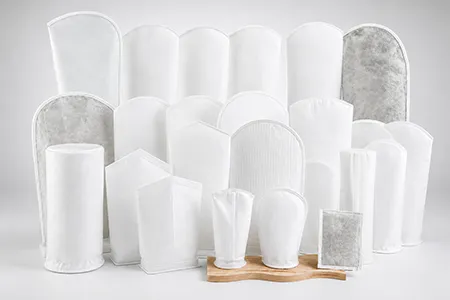
Buyers constantly compare the two soft and rigid options. A bag filter vs cartridge filter decision comes down to dirt load and precision. The reverse question, cartridge filter vs bag filter, matters when a plant already owns one housing type. Bags win on cost per unit and dirt holding. Cartridges win on precision and disposal volume. Here is the honest comparison.
| Feature | Filter bag | Filter cartridge |
|---|---|---|
| Unit cost | Lower | Higher |
| Dirt holding | High (felt depth) | Moderate |
| Removal precision | Nominal, 1 to 1000 micron typical | Absolute possible, 0.1 to 100 micron |
| Change time | Minutes | Minutes |
| Disposal volume | Higher | Lower |
| Best duty | Pre-filtration, paint, coolant | Final filtration, hydraulic, fine duty |
Below 10 micron absolute, a cartridge usually wins. Above 50 micron with heavy sediment, a bag usually costs less per year. Many plants run both in series. Pleated filter bags sit in the middle of the debate. They add pleats to a bag format for more surface area. Pleated bags change as fast as standard bags, and they hold more dirt than a flat felt bag of the same size. That middle ground suits paint, coolant and wash-water loops.
Filter Bag Materials Compared
Material choice decides chemical resistance and temperature range. Five materials cover nearly every industrial filter bag. The table below shows the common patterns, with typical values for guidance.
| Media | Typical rating | Max temp (typical) | Best for |
|---|---|---|---|
| Polypropylene (PP) | 1 to 200 µm | 90 °C | Water, paint, most chemicals |
| Polyester (PE) | 1 to 1000 µm | 150 °C | Oils, coolants, general liquids |
| PTFE | 0.5 to 50 µm | 260 °C | Aggressive acids, high heat |
| Nylon | 1 to 200 µm | 120 °C | Solvents, abrasive slurries |
Polyester filter bags are the market default. They resist moisture, oils and most solvents well. Polypropylene bags cost a little less and suit water and paint lines. PTFE bags handle aggressive acids and high temperatures. Nylon bags resist abrasion and many solvents.
1. Felt vs mesh construction
Each material also comes as felt or mesh. The felt grade is usually polyester felt, PP felt, or PTFE felt. The mesh grade is woven from the same polymers. A felt bag gives depth filtration; a mesh bag gives surface filtration. Match the material to the fluid chemistry first, then match construction to the dirt load.
2. Temperature and chemical limits
Polyester is the workhorse up to 150 °C typical. Polypropylene covers water and paint at lower temperatures. PTFE is the answer for hot acids where nothing else survives. Nylon adds abrasion resistance for slurry duty. When a spec sheet omits temperature, ask before you buy.
Micron Ratings Explained
Micron ratings for filter bags run from 0.5 to 1000 micron. A micron is one-thousandth of a millimeter. A human hair is about 70 to 100 micron thick. A 1 micron water filter bag catches particles far smaller than the eye can see.
1. Nominal vs absolute ratings
Ratings are usually nominal, not absolute. Nominal means the bag removes most particles above the rating. Absolute means every pore is capped at that size. Felt bags quote nominal ratings in practice. Mesh bags quote opening size, which is closer to absolute. The test method matters as much as the number. Some suppliers rate by particle count; others use bubble point. Always ask which method produced the number.
2. Mesh count and opening size
Mesh filter bags are graded by weave count. A 100 mesh screen has roughly 100 openings per inch. That translates to about 150 micron opening size, typical. A 400 mesh screen drops to about 37 micron opening size, typical. The finer the mesh, the higher the pressure drop.
3. Matching the rating to the equipment
For fine work below 10 micron, felt is the usual answer. For cake filtration, mesh releases the cake better. A common mistake is buying the finest bag available for extra protection. Too fine a rating raises pressure drop and blinds the bag fast. Match the rating to what the equipment manufacturer specifies, not to what the catalog offers.
Typical applications map to typical bands. A 1 micron water filter bag protects reverse osmosis membranes. A 5 to 10 micron bag guards pumps and valves in general water service. A 25 micron bag cleans coolants and quench oils. A 100 to 200 micron bag removes coarse sediment and scale. A 500 to 1000 micron bag protects spray nozzles from large debris. Each band has a cost, and finer is not always better.
Standard Bag Sizes #1 to #4
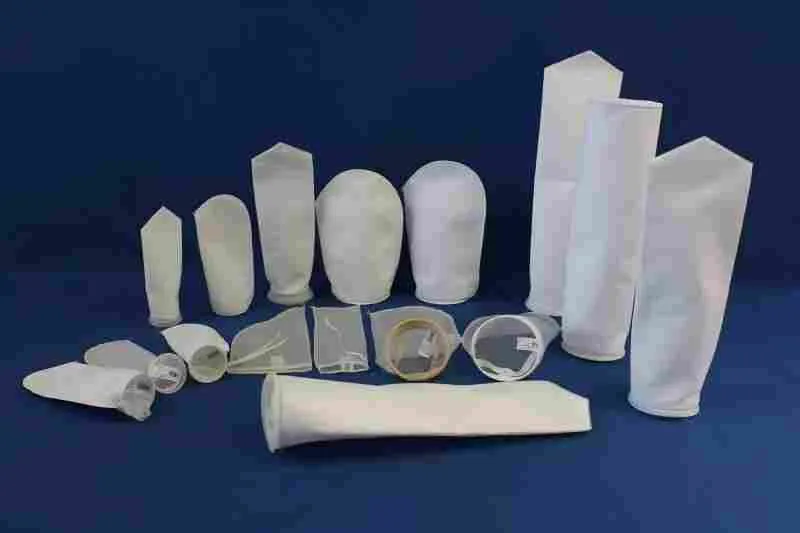
Standard filter bags follow four industry sizes. These sizes are universal across suppliers. Size 1 is about 7 inches by 16 inches. Size 2 is about 7 inches by 32 inches. Size 3 is about 4 inches by 9 inches. Size 4 is about 4 inches by 14 inches. The numbers come from the original bag filter standard.
| Size | Dimensions (typical) | Typical flow | Typical use |
|---|---|---|---|
| #1 | 7" x 16" (~180 x 410 mm) | 1 to 25 gpm | Small process lines |
| #2 | 7" x 32" (~180 x 810 mm) | 20 to 100 gpm | General plant duty |
| #3 | 4" x 9" (~100 x 230 mm) | 1 to 10 gpm | Pilot and chemical lines |
| #4 | 4" x 14" (~100 x 355 mm) | 5 to 25 gpm | Small-batch filtration |
A Size 1 bag fits a single-bag housing rated about 1 to 25 gpm typical. A Size 2 bag fits housings rated about 20 to 100 gpm typical. Size 3 and Size 4 bags serve small pilot and chemical lines.
Every bag also has a top ring style. The common styles are the sewn-in flange ring and the plastic snap ring. The housing collar must match the ring style. A felt ring seals the bag in a clamp housing. A snap ring locks into a basket groove. Most suppliers list bags by size number and micron rating. Always confirm length and ring style before ordering.
Bag Filter Housings
The bag is only half of the system. The filter bag housing holds the bag, the flow, and the pressure.
1. Single-bag vs multi-bag housings
Single-bag housings are the most common. A multi bag filter housing holds 2, 4, 6, 12 or more bags in parallel. Parallel bags multiply flow without changing micron rating. A housing that feeds 2 filter bags unevenly will blind one bag fast, so check the manifold design.
2. Housing materials and ratings
Bag filter vessels range from small plastic units to big steel pressure vessels. A bag filter housing plastic unit suits light chemical duty. An industrial bag filter housing handles pressure and flow. Housing material matters: plastic, carbon steel, or stainless steel. Stainless suits food, pharma and aggressive chemicals. Carbon steel suits oil and general industrial lines.
3. What to check before buying
A good bag filter housing manufacturer quotes flow, pressure and connection size. Look for a housing rated above your pump pressure. Check the basket, the lid clamp and the seal. The basket supports the bag so it does not collapse. A liquid bag filter housing needs a vent and a drain. Multi-bag units need even flow distribution across every bag. Ask how the manifold splits flow before you commit.
Dust Collector Filter Bags
Dust collection is the other big filter bag market. Industrial dust collector filter bags clean air, not liquid. They run in baghouses, cartridge collectors and pulse-jet systems.
Dust bags for dust collector units capture fine powders from process air. The same family includes filter bags for dust collector lines and filter bags for dust collectors of every size. A dust filter bag catches particles on its surface. A pulse of compressed air shakes the cake off. That cleaning cycle keeps pressure drop low.
Media choices include polyester felt, PTFE felt and antistatic grades. Polyester handles most dry dusts below its temperature limit. PTFE handles sticky, hot or corrosive dusts. Antistatic bags prevent static build-up in combustible dust. Antistatic bags are mandatory in many powder handling plants.
A bag filter dust collector uses bags in long cylindrical form. A filter bag dust collector with pleated elements is a different design, since pleated elements pack more media per vessel. Industrial filter bags and industrial dust collector filter bags are built to the same sizing logic. Dust collection filter bags are sized by diameter and length. Common diameters run 4 to 8 inches; lengths run 6 to 12 feet, typical. Air filter bags serve intake and ventilation duty, and they remove coarse dust before finer filters. Match the bag media to the dust chemistry and temperature, then match the cleaning system to the dust load.
Replacement Cost and Change Intervals
Replacement cost is where bags win the spreadsheet. A standard felt bag costs a fraction of a cartridge. The exact number depends on size, material and rating. A typical Size 2 polyester felt bag sells for a few dollars each. A 1 micron PTFE bag costs several times that. Replacement cost per year is the number that matters, and it includes bag price, labor, disposal and downtime.
1. Price per bag vs price per pack
E-commerce listings pack bags in different counts. A filter bag felt poly 160 gpm 1m pk10 listing means a 1 micron felt poly bag, rated 160 gpm flow, packed ten per case. That flow rating is typical for a Size 2 poly bag at 1 micron. Ask the filter bag supplier for the same spec in your size. A reliable filter bag manufacturer publishes flow and micron data. So does a serious bag filter supplier. Brand names like FSI bag filters appear often in paint and coolant lines, and the same data-sheet discipline applies to any brand.
2. Change intervals by duty
Many plants change bags on a pressure-drop schedule. A typical trigger is 2 to 3 times the clean pressure drop. Felt bags in paint service often last one shift to a week. Mesh bags in the same line can last months. Change intervals depend on dirt load, not the calendar. Track the differential pressure gauge and change at the trigger. A torn bag is worse than a late change, because debris dumps straight into the downstream equipment.
3. The real cost of a wrong bag
A bag that blinds early costs you labor and media. A bag that tears costs you downstream damage. Compare the price per bag, not the price per pack. Add the disposal cost, which is real for contaminated media. Then the yearly comparison between bags and cartridges becomes honest.
Labor is part of the replacement cost. A bag change takes minutes with a clamp housing. A cartridge change can take longer with a bolted head. Downtime cost usually dwarfs the media price. A plant that changes 10 bags a week counts those minutes. Faster change-out is a real reason plants pick bags. Factor the hourly cost of your line into the comparison. The bag with the lowest sticker price is not always the cheapest.
How to Select the Right Filter Bag
Selection is a five-step calculation, not a guess.
1. The five-step selection calculation
- Define the flow rate in gallons per minute.
- Set the target micron rating from the equipment spec.
- Pick the bag size from the flow rate table.
- Choose the material for the fluid chemistry and temperature.
- Confirm the ring style and the housing pressure rating.
A simple selection calculation looks like this. Flow of 60 gpm with a 25 micron target points to a Size 2 bag. Flow of 10 gpm with a 5 micron target points to a Size 1 bag. Higher flow may need a multi bag filter housing. Two bags at 30 gpm each beat one bag at 60 gpm.
Here is a worked example. A plant pumps 40 gpm of cooling water with visible sediment. The equipment spec calls for 50 micron protection. The flow points to a Size 2 bag at moderate velocity. The fluid is water at 30 °C, so polypropylene felt works. The housing is a single-bag unit with a clamp ring. The order reads: Size 2, 50 micron, PP felt, flange ring. That is the whole calculation in one line.
2. Velocity and sizing rules
Bag velocity matters as much as flow. High velocity pushes dirt through the felt and blinds it fast. The rule of thumb is to keep velocity moderate per bag. A typical felt bag handles 1 to 5 gpm per square foot of media. Mesh bags handle higher flow per square foot. Temperature and chemical exposure set the material floor, so if the fluid attacks polyester, step up to PP or PTFE. The housing pressure rating must exceed the pump pressure, and adding a safety margin of 25 percent is typical.
3. Pleated bags for tight flow
Pleated bag filters add surface area when flow is tight. Pleated filter bags fit the same housings and rings. They suit applications where a standard bag would blind early. Pleated bags cost more per unit but often last longer. The yearly cost comparison settles the argument. Work the calculation before you buy, and sample one bag first. The sample confirms fit, flow and pressure drop.
Common Mistakes Buyers Make
- Buying by price per pack — pack counts vary; compare price per bag.
- Guessing the micron rating — read the spec, and ask if it is nominal or absolute.
- Oversizing the flow — one bag doing the work of two blinds in hours.
- Ignoring the ring style — a flange bag will not seat in a snap-ring collar.
- Skipping chemical compatibility — polyester melts or swells in the wrong solvent.
- Running past the pressure trigger — a torn bag dumps dirt downstream.
Each mistake shows up as a failed pump, a rejected batch, or a bag that tears at the seam. All of them are avoidable with a spec sheet and a calculator.
The Bottom Line
A filter bag is the cheapest way to remove a lot of dirt fast. Choose the material for the fluid, the rating for the spec, and the size for the flow. Buy from a supplier who publishes flow and micron data. Sample one bag before you commit to volume. Track pressure drop so you change on schedule, not on memory.
PLEATPURE manufactures liquid filter bags, dust collector filter bags and bag housings factory-direct. We publish flow and micron data for every bag, and our team will run the selection calculation with you. Browse the filter bag range, review the bag housings, or send your flow rate and particle size for a cross-reference quote.
NEXT STEP
Ready to Switch to Replacement Filter Cartridges?
Send us your element dimensions or part numbers — our team responds within 24 hours with pricing and lead time.
Written by
Ray ChanFiltration Buyer's Guide Author · Industrial Filter Cartridge Specialist. Ray helps global importers, distributors and maintenance teams source factory-direct replacement filter cartridges.