
Filter Cartridge Guide 2026: Complete Buyer Manual
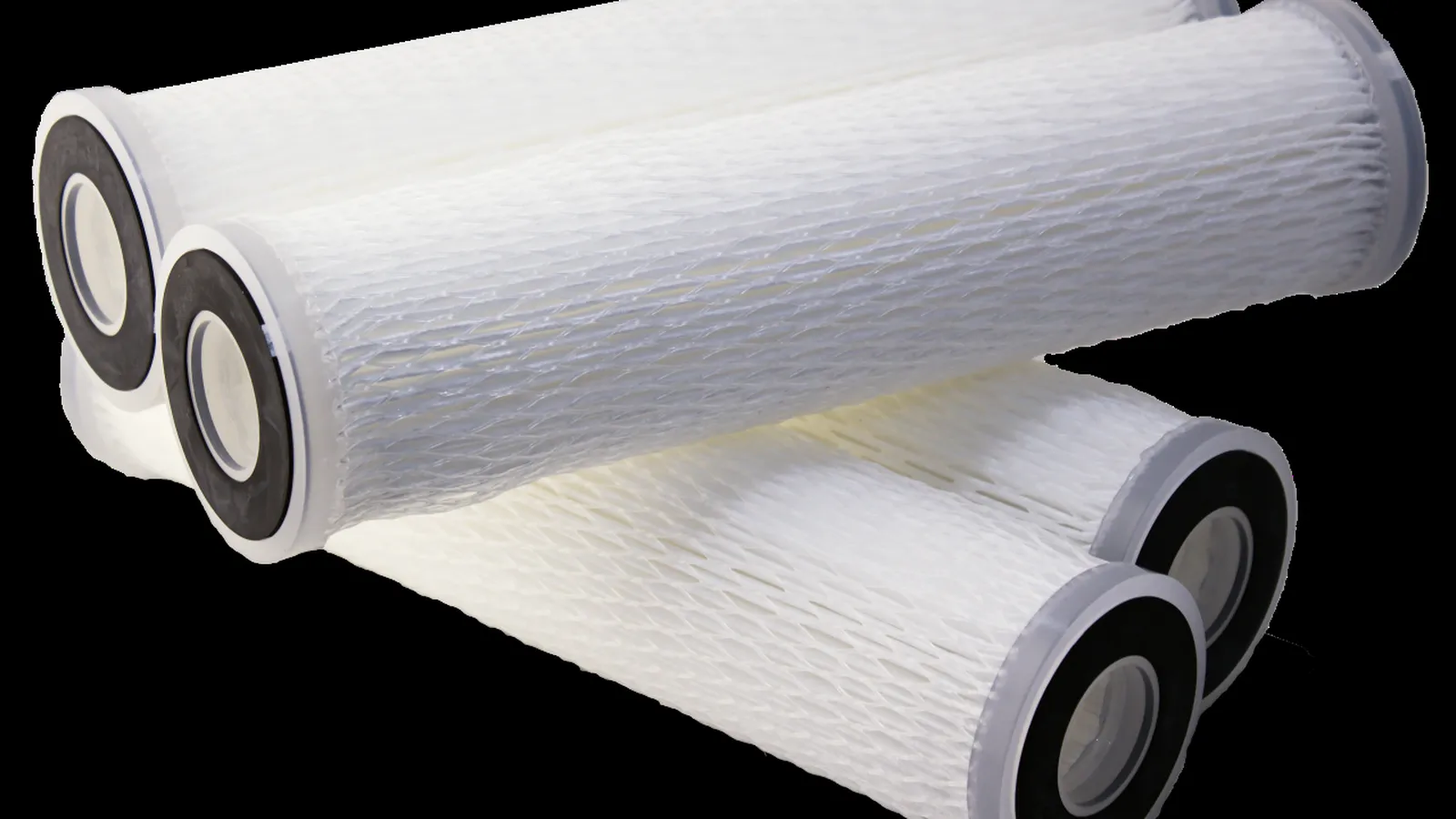
Table of Contents
A missed filter change shut down a food plant for nine hours last year. The production line stopped, the batch was scrapped, and the maintenance crew spent the shift tearing apart a pump that had been slowly scoring itself for weeks. The total bill, between lost production and repair parts, crossed $40,000. All of it traceable to one clogged liquid filter cartridge that nobody replaced on schedule.
Filter cartridges are the cheapest insurance in any hydraulic, pneumatic or process system. A good element costs tens of dollars. The pump, valve or compressor it protects costs thousands. Whether you search "filter cartridge water", "water filter cartridges" or "replacement water filter cartridge", the question underneath is the same: which element do I actually need, and how do I know it will work. Buyers searching for a "water filter cartridge replacement" or "replacement water filters cartridges" are usually one bad experience away from switching suppliers. This guide covers what a filter cartridge is, how media and micron ratings actually work, how to compare pleated, depth and bag designs, and what to check before you place your next order. Keep reading for more!
Key Facts at a Glance
- Definition — A filter cartridge is a replaceable element that removes solid particles, and in some designs chemicals, from a fluid stream.
- Removal ratings — Industrial cartridges range from 0.1 to 100 micron nominal or absolute; hydraulic systems typically run 3 to 25 micron.
- Efficiency — Beta ratio (βx(c)) is the industry standard for filter performance, tested per ISO 16889.
- Construction — Pleated media packs more surface area into the same housing; depth media holds more dirt per volume.
- Replacement — A replacement filter cartridge is matched by outer diameter, inner diameter, length, thread and media class, which makes cross-brand interchange fit possible and keeps aftermarket pricing competitive.
What Is a Filter Cartridge
A filter cartridge is the working core of a filtration system. It sits inside a filter housing or head, and the fluid being cleaned flows through it under pressure. The cartridge catches particles too large to pass its media, so the fluid that exits is cleaner than what entered.
You will hear several names for the same part. "Filter cartridge" and "filter element" are interchangeable in most industries. Hydraulic buyers say "hydraulic filter element" or "hydraulic oil filter cartridge". Air compressor buyers say "air filter element" or "oil separator element". Water treatment buyers say "water filter cartridge", "sediment filter cartridge", or simply a "replacement filter for water". They all describe the same thing: a disposable, replaceable filtration component with defined dimensions and a defined filtration rating.
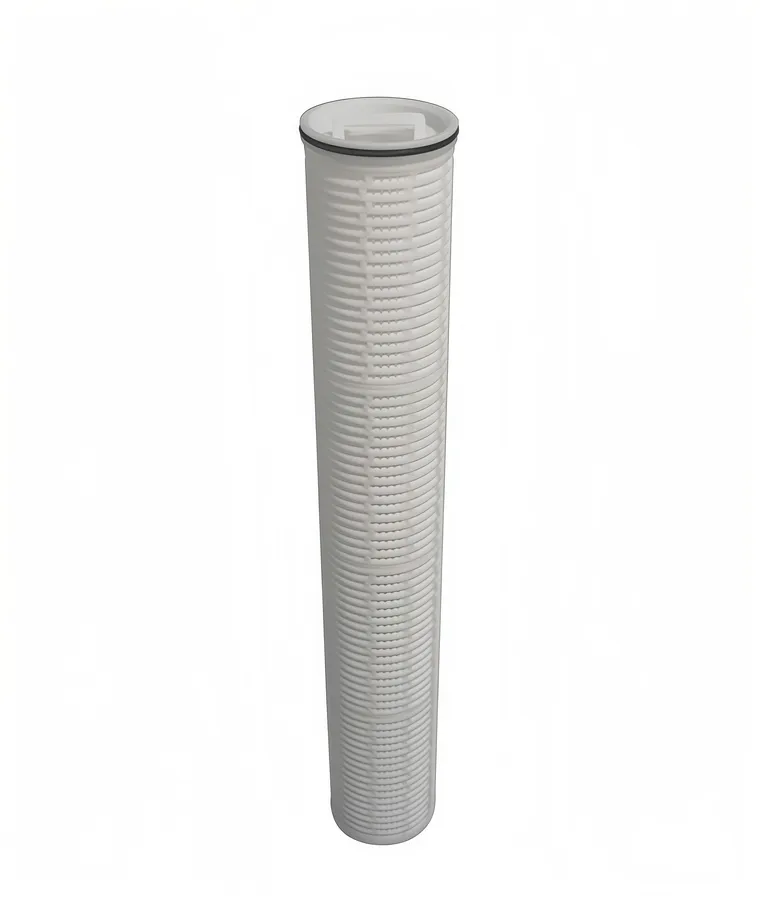
Three dimensions decide whether a cartridge fits your housing: outer diameter, inner diameter and overall length. Thread type and seal configuration matter too, especially in hydraulic and high-pressure applications. If any of these are wrong, the cartridge will not seat properly, and unfiltered fluid will bypass it entirely.
How a Filter Cartridge Works
Filtration happens in two ways: surface filtration and depth filtration. Surface filtration catches particles on the surface of the media, like a sieve. Depth filtration traps particles inside the thickness of the media, like a sponge that happens to stop dirt.
Most industrial cartridges use a combination. A pleated cartridge with melt-blown or glass-fiber media catches large particles on the surface while smaller particles get trapped in the media depth. This layered approach gives better dirt-holding capacity than either mechanism alone.
Three performance numbers describe any cartridge:
- Micron rating — the particle size the media is designed to remove
- Beta ratio — how efficiently it removes particles of that size
- Pressure drop — the resistance the media adds to the flow, measured across the cartridge
Pressure drop matters more than most buyers realize. A cartridge that is too fine for the flow rate starves the system. A cartridge that is too coarse lets damaging particles through. The right cartridge balances filtration efficiency against flow resistance for your specific operating pressure and flow.
Media Types Compared
The media is what does the work, so media choice is the first decision. Five media types cover the vast majority of industrial applications:
| Media | Typical rating | Best for | Notes |
|---|---|---|---|
| Cellulose (paper) | 5 – 50 µm | General water and coolant filtration | Lowest cost; lowest dirt-holding capacity |
| Polyester / synthetic | 1 – 100 µm | Chemical, food and pharmaceutical | Chemically resistant; high flow |
| Glass fiber | 1 – 10 µm | Hydraulic and lubrication systems | High efficiency; βx(c)≥200 or 1000 typical |
| Melt-blown polypropylene | 0.5 – 100 µm | Water, pre-filtration, RO protection | Depth media; high dirt holding |
| Activated carbon | N/A (adsorption) | Chlorine, odor and VOC removal | Removes chemicals, not just particles |
1. Cellulose and polyester media
Cellulose cartridges are the economy choice for water and coolant. They filter adequately at 5 to 50 micron, cost little, and are fine where dirt loads are modest. Polyester media resists chemicals and moisture far better, which is why food, beverage and pharmaceutical plants specify it. A pleated filter with polyester media handles higher flow than cellulose at the same rating.
2. Glass fiber media
Glass fiber is the standard for hydraulic and lubrication filtration. It removes particles in the 1 to 10 micron range at high efficiency, with beta ratings of βx(c) = 200 or 1000 typical. The downside is cost and lower dirt-holding capacity than depth media, so glass fiber elements are usually paired with a coarser pre-filter or a suction strainer.
3. Melt-blown and string-wound media
A melt blown filter builds a graded pore structure from polypropylene fibers, which lets it hold a lot of dirt before plugging. A string wound filter wraps yarn around a core at controlled density for the same purpose. Both are depth media: they trap particles inside, not just on the surface. You will see them everywhere in water pre-filtration and RO protection.
4. Activated carbon media
An activated carbon filter cartridge adsorbs chlorine, taste, odor and volatile organics instead of straining particles. Carbon cartridges have no meaningful micron rating for particles; their spec is capacity, measured in grams of carbon or gallons treated. Use a sediment cartridge upstream of an activated carbon filter cartridge, or the carbon gets coated in dirt and stops adsorbing.
If you are filtering hydraulic oil, glass fiber is the usual answer. If you are filtering water before a reverse osmosis membrane, a melt-blown depth cartridge plus a pleated sediment cartridge is the standard combination. If you are removing chlorine or taste, activated carbon is required. Getting the media wrong is the most common reason a "new" cartridge performs worse than the old one.
Pleated vs Depth Construction
Construction style decides how much media fits in the cartridge and how it loads with dirt.
1. Pleated construction
Pleated filters fold the media into accordion pleats around a central core. A standard 10-inch pleated filter cartridge can pack 5 to 8 square feet of media into a housing that a flat sheet could never fill. More media means lower pressure drop and longer service life at the same removal rating. Pleated filters are the default for hydraulic, air compressor, and most process applications. Pleated air filters follow the same principle in intake and HVAC duty, where pleated air filters trade a little pressure drop for much longer element life.
2. Depth construction
Depth cartridges, usually melt-blown or string-wound, trap particles throughout the media thickness. They hold more total dirt than a pleated cartridge of the same size, which makes them popular for high-sediment water and pre-filtration duty. The trade-off is a higher pressure drop and a less precise removal rating.
3. Which one for your fluid
String-wound cartridges are the classic depth design: yarn wound around a core at a controlled density. They are cheap, effective for sediment, and still common in water treatment. Pleated cartridge filters win wherever precision matters; depth designs win wherever dirt volume is the problem. Many plants use pleated filter bags or cartridges in sequence with depth media. The table below summarizes the trade-offs.
| Feature | Pleated | Melt-blown depth | String wound |
|---|---|---|---|
| Surface area | High (pleats) | Medium | Low |
| Dirt holding | Good | High | High |
| Removal precision | Precise (β-rated) | Nominal | Nominal |
| Pressure drop | Low | Medium | Medium |
| Typical use | Hydraulic, air, final | Water pre-filtration | Sediment, coolant |
Many plants run a depth cartridge first and a pleated cartridge second. The depth stage captures the bulk of the dirt cheaply; the pleated stage protects the downstream equipment precisely. This two-stage approach usually cuts total filter cost per year compared to a single fine filter.
Micron Ratings & Efficiency
A micron is one-millionth of a meter. For scale: a human hair is about 70 to 100 micron thick. A red blood cell is about 7 micron. A typical hydraulic system particle that damages a pump is in the 3 to 15 micron range.
1. Nominal vs absolute ratings
Micron ratings come in two flavors: nominal and absolute. Nominal means the media removes "most" particles above the stated size, with no strict efficiency guarantee. Absolute means the largest pore in the media is capped at that size, typically tested per ISO 2942 bubble point or ISO 16889 multi-pass. If a spec sheet does not say which one applies, ask. Many cartridge filters on the market quote a nominal number that flatters the real performance.
2. Matching the rating to the system
A common mistake is buying the finest cartridge available "for extra protection". Too fine a rating raises pressure drop, shortens element life, and in hydraulic systems can cause cavitation on the suction side. Match the rating to what the equipment manufacturer specifies. If the manual says 10 micron, a 3 micron element is not automatically better. This is especially true for a cartridge filter for water service: overspecifying micron rating on a water line just doubles your element spend.
Beta Ratios and ISO 16889
The beta ratio is the honest way to compare filter efficiency. It is written as βx(c), where x is the particle size in micron. A filter with β10(c) = 200 upstream of a test, by definition, passes 1 particle for every 200 it captures at the 10 micron size. That works out to 99.5% removal efficiency at 10 micron.
| Beta ratio | Removal efficiency | Typical use |
|---|---|---|
| βx(c) = 75 | 98.7% | General hydraulic filtration |
| βx(c) = 200 | 99.5% | Standard industrial hydraulic |
| βx(c) = 1000 | 99.9% | High-value systems, servo valves |
ISO 16889 is the multi-pass test standard that produces beta ratios you can compare across brands. A cartridge rated βx(c) = 200 by one manufacturer should perform like a βx(c) = 200 cartridge from another, provided both actually test per ISO 16889. When a supplier quotes a beta ratio without the test standard, treat the number with caution. Typical values shown; confirm the test standard on the data sheet.
Cartridge vs Filter Bag
Filter bags are the main alternative to cartridges for liquid filtration. A bag drops into a bag filter housing and captures particles the same way, but the economics differ.
- Bags cost less per unit, hold a lot of dirt, and change fast. They suit high-sediment, low-precision duty like paint, coolant and pre-filtration.
- Cartridges filter more precisely, last longer at fine ratings, and generate less disposal volume. They suit final filtration and anything with a strict cleanliness requirement.
As a rough rule, if you need below 10 micron absolute, go cartridge. If you are filtering 50 micron-plus sediment and changing frequently, a bag system will likely be cheaper per year. Many plants run both: liquid filter bags for bulk removal, cartridges for final protection. Pleated filter bags, which add pleats to a bag format, offer a middle ground for buyers who want bag-change speed with cartridge-style surface area.
Applications by Industry
Every industry that moves fluid moves dirt with it. The cartridge choices below are the common patterns:
- Hydraulic systems — glass-fiber elements, 3 to 25 micron, return and pressure line filtration. See our hydraulic filter cartridge range.
- Air compressors — intake filters, oil separators and coalescing elements; ISO 8573-1 classes for compressed air quality.
- Water treatment — sediment, carbon, and RO pre-filtration cartridges; 1 to 50 micron typical.
- Food and beverage — food-grade polyester and depth cartridges; FDA-compliant media required for contact duty.
- Pharmaceutical — absolute-rated membrane cartridges, often 0.2 micron sterilizing grade.
- Dust collection — pleated dust collector filter cartridges, dust cartridge filter elements and cartridge dust collectors for baghouses and pulse-jet systems. See our dust collector cartridge range.
If your application is not on this list, the buying checklist below still applies. Dimensions, media, rating and sealing are universal.
Replacement & Interchange Fit
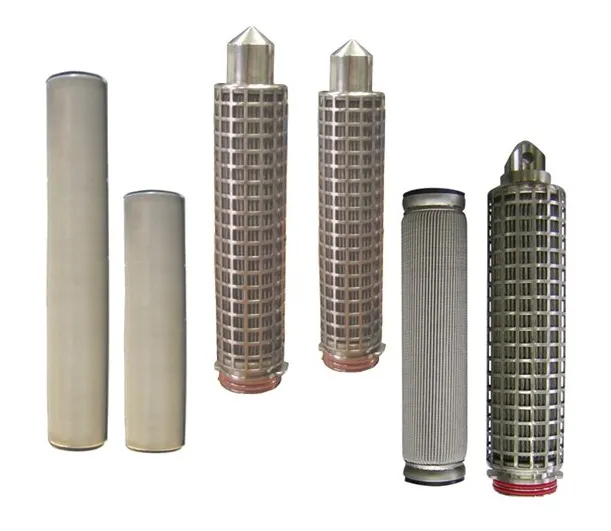
Replacement filter cartridges are big business because every installed filter eventually needs a new element. The replacement market splits into two routes: buy the original brand, or buy an interchange element matched to the original dimensions.
An interchange or cross-reference element is manufactured to the same outer diameter, inner diameter, length, thread and media class as the original. When done properly, it drops into the same housing, seals the same way, and filters to the same performance class. The cost is typically 30 to 50% below the original-brand element, and lead times are usually shorter because the interchange manufacturer stocks by dimension family rather than by single brand.
The critical word is "properly". A cheap element that matches length but skimps on media class will pass particles the original stopped. That is why you should buy interchange filter elements from a manufacturer who can quote the original dimensions and the media class, not just a length and a price. At PLEATPURE we manufacture cross-brand interchange elements verified against original dimensions and tested media classes, covering Parker, Hydac, Mahle, Pall, Donaldson and Boll & Kirch families among others. Our replacement filter elements are matched by OD, ID, length, thread and seal so the swap takes minutes, not a rebuild.
If you do not know which element you need, read the part number stamped on the old element, or measure outer diameter, inner diameter and length. Both routes lead to the same interchange table. See our hydraulic filter cartridge range for the most common hydraulic interchange families.
Buying Checklist
Before you place an order, run this checklist:
- Measure or read the old element — OD, ID, length, thread, seal type.
- Confirm media class — glass fiber for hydraulic, polyester for chemicals, carbon for taste and odor, melt-blown for sediment.
- Confirm micron rating — nominal or absolute, and the beta ratio if rated per ISO 16889.
- Check operating conditions — max temperature, pressure and flow; make sure the cartridge is rated above them.
- Know your housing — a cartridge filter housing and a filter cartridge housing may look alike but differ in seal style and flow direction. Confirm the housing model before ordering a filter cartridge replacement, and if you are buying from a filter element store, quote the housing brand, not just the length.
- Ask about MOQ and lead time — stock items ship fast; custom media builds take longer.
- Order one sample first — test fit, seal and pressure drop before committing to volume. A "cartridge filter cartridge" mismatch (cartridge model vs housing model) is the classic sample-order catch.
A sample-first approach costs one cartridge and one hour of maintenance time. It prevents ordering a thousand units of an element that does not seat correctly in your housing. A sediment water filter cartridge, for example, looks identical across three brands but can differ in end-cap geometry — the sample order is the only way to be sure.
Common Mistakes Buyers Make
- Buying by brand instead of by dimension — the brand stamp on the old element is not the spec. Measure it.
- Going finer than specified — a finer cartridge is not automatically better; it raises pressure drop and shortens life.
- Ignoring the seal — a cracked O-ring or missing gasket lets unfiltered fluid bypass the element.
- Stretching change intervals to save money — a collapsed or burst element costs more than the filters you skipped.
- Mixing media classes — swapping a glass-fiber hydraulic element for a cellulose one changes the cleanliness level of the whole system.
Each of these mistakes shows up in the field as an expensive surprise: a failed pump, a scored cylinder, a rejected batch. All are avoidable with a spec sheet and a ruler.
How often should you change a filter cartridge
Change intervals depend on duty, not on the calendar alone. Hydraulic return elements typically run 500 to 1,000 operating hours; suction elements less, because they protect the pump directly. Air compressor oil separators are usually changed on a 1,000-hour or 2,000-hour schedule, whichever comes first with a pressure-drop check. Liquid cartridges in water service change when the differential pressure indicator rises, typically 10 to 15 psi above the clean element reading, or on a fixed 3 to 6 month cycle.
The cheapest change policy is a fixed interval plus a pressure-drop check. The most expensive is "when it breaks". If your system has a differential pressure gauge or indicator, use it. A cartridge that runs past its pressure-drop limit collapses or bursts, and the debris it was holding gets dumped downstream — exactly where you did not want it.
The Bottom Line
A filter cartridge is a small, replaceable part with an outsized job: protect equipment that costs hundreds of times more than the element itself. Choose the media for the fluid, the rating for the equipment spec, and the construction for the dirt load. Buy replacement cartridges by dimension and media class, not by brand habit. And when you switch to an interchange element, verify the manufacturer against the original dimensions first.
PLEATPURE manufactures pleated, hydraulic, air compressor and liquid filter cartridges factory-direct, with cross-brand interchange fit verified against original dimensions. Every element is checked for dimension, seal integrity and media integrity before it ships, and volume buyers get a dedicated account manager and MOQ flexibility. Browse the full range or send us your part number for a cross-reference quote.
NEXT STEP
Ready to Switch to Replacement Filter Cartridges?
Send us your element dimensions or part numbers — our team responds within 24 hours with pricing and lead time.
Written by
Ray ChanFiltration Buyer's Guide Author · Industrial Filter Cartridge Specialist. Ray helps global importers, distributors and maintenance teams source factory-direct replacement filter cartridges.