
Best Filter Cartridge for Water 2026: 8 Key Parameters to Rank Your Options
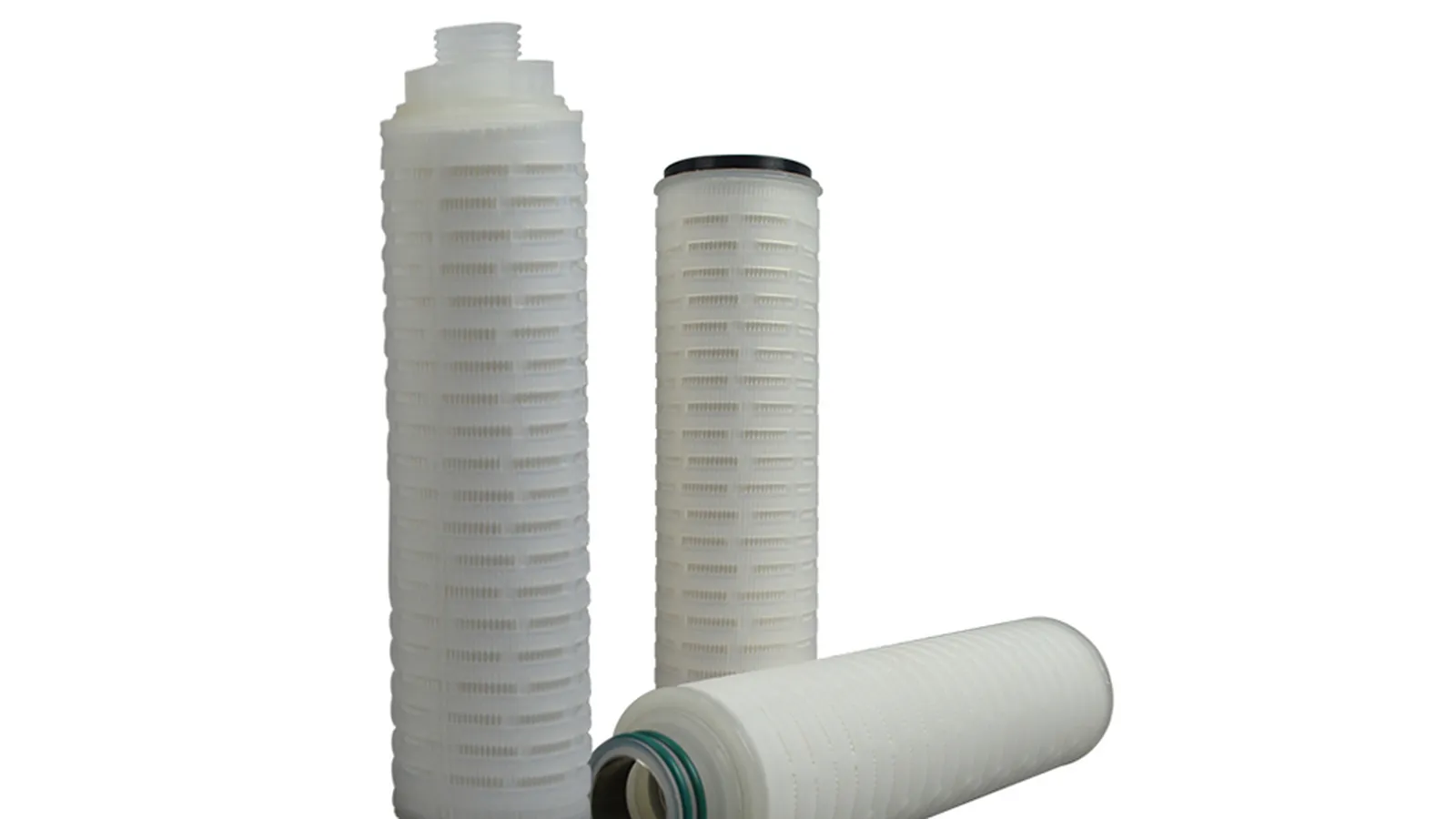
Table of Contents
A beverage plant in Guangdong changed its 10-inch cartridges every six months on faith alone. Nobody watched the pressure gauge. The pump feeding the filling line lost flow one Tuesday, the batch was scrapped, and the emergency element order cost triple the normal price. The total damage crossed $18,000, all of it caused by a sediment water filter cartridge that should have been swapped two weeks earlier.
Searching "best filter cartridge for water" returns thousands of listings and very little honesty. Most hits are household water filter cartridges for fridges and under-sink taps, which belong to a different product class than the industrial elements ranked here. This listicle covers the water filter cartridges that actually run process lines, RO plants and compressor rooms. We rank them by the same five criteria a plant engineer would use.
Every filter cartridge water filtration system needs a matched housing, a correct micron rating and a realistic change plan. A water filter cartridge that seats badly bypasses, and one that is too fine starves the pump. Keep reading for more!
This ranking ignores brand stickers and marketing claims. It assumes a clean housing, a real pressure gauge, and a process that can tolerate a brief shutdown at change-out. If your plant runs 24/7, factor a duplex housing into the budget before you pick a cartridge.
Key Facts at a Glance
- Winners — Pleated 10 x 2.5 wins for standard housings. Big blue 10 x 4.5 wins for high flow. Catalytic carbon wins for chloramine.
- Removal rating — Most water cartridges are nominal-rated; only a few carry absolute or beta-rated specs you can trust.
- Fit — OD, ID, length and seal decide whether a replacement water filter cartridges seats correctly in your housing.
- Change interval — Sediment types typically run 3 to 6 months; carbon types 6 to 12 months at moderate load.
- Media — Pleated polyester, melt-blown, carbon block, string wound and stainless mesh cover 95% of water duty.
- Cost — Unit price lies; cost per year, with change labor and disposal, is the number that matters.
How We Ranked These Cartridges
We scored every candidate against five criteria, with weights that reflect what a maintenance budget actually pays for.
1. Removal precision (25%)
Nominal ratings dominate the water market. We favored cartridges with absolute or beta-rated specs where they exist, and flagged the rest as nominal.
2. Dirt-holding capacity (20%)
More dirt holding means longer runs between changes. We compared typical pressure-drop rise against rated flow.
3. Fit and interchange (20%)
OD, ID, length and seal decide whether a cartridge seats. We favored dimension families with stock across multiple brands.
4. Change interval (20%)
Months between swaps, not element price, drives yearly cost. We used typical service life at moderate dirt load.
5. Cost per year (15%)
We priced element cost, change labor and disposal together. A cheap cartridge changed monthly loses to a pricier one changed twice a year.
A worked example shows how the weights bite. A 10 x 2.5 pleated element scores high on fit and change interval, so it wins the overall slot. A carbon block scores low on dirt holding, which is why it never wins a sediment job. The ranking below follows the same math for every pick.
We also verified availability, because a ranked winner you cannot stock is a ranking that fails in the field. Every pick below is available in the common dimension families, including 10 x 2.5, 10 x 4.5 and 20-inch lengths.
We scored with public data sheets and typical values, not with lab tests of our own. That is a limit worth stating, because every manufacturer quotes a slightly different rating method. When two candidates tie on paper, the tie-breaker is stock availability and lead time.
We tested only industrial and commercial water duty. Fridge and under-sink cartridges were excluded from scoring, because their housings and change economics do not transfer to plant service.
Every number below is a typical data-sheet value. Confirm the actual spec with your supplier before ordering.
Best Overall: Pleated 10 x 2.5
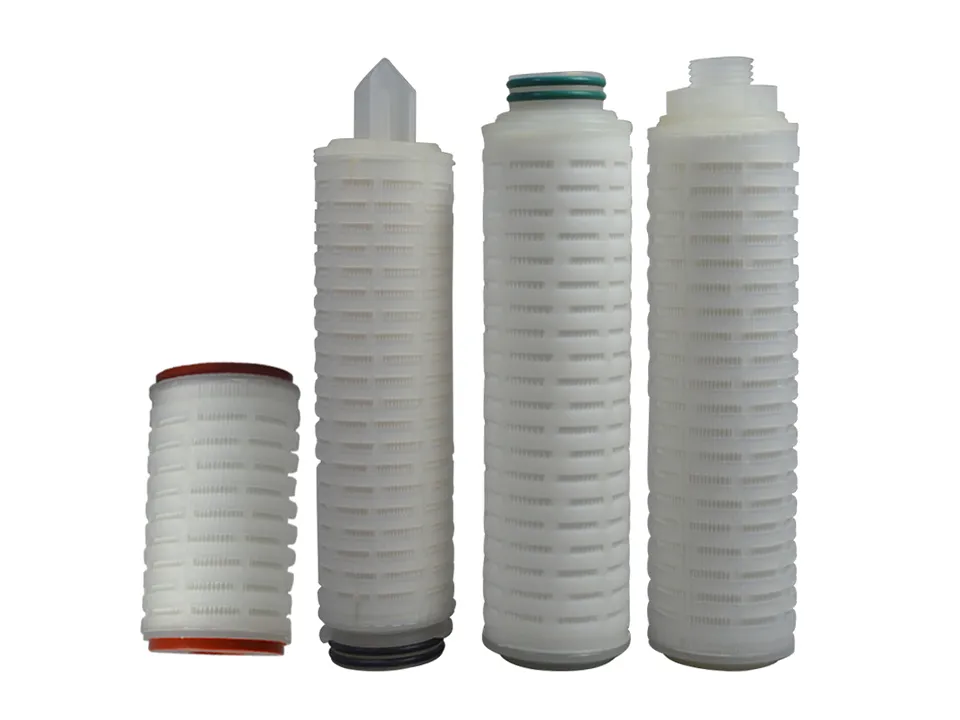
If your housing takes a 10-inch slim line, the best 10 x 2.5 water filter cartridge is a pleated sediment element. Pleats pack 5 to 8 square feet of media into a 2.5-inch body, which keeps pressure drop low and life long. Search "best 10'' x 2.5 water filter cartridge" and this size family dominates the results for a reason.
Best for: process water, RO pre-filtration, coolant loops and general plant duty.
Core specs: outer diameter 2.5 in, inner diameter 1 in, length 9.75 in typical. Rating 1 to 50 micron typical. Change at 8 to 15 psi pressure drop.
Not for: flow above about 10 gpm, chloramine-heavy feed, or fine absolute duty below 1 micron.
A pleated polyester version resists chemicals and moisture better than cellulose. Buy the polyester grade for food or beverage contact duty, and the cellulose grade where budget rules.
A sediment filter cartridge of this size costs little and changes fast. That combination makes it the default first pick for most plants.
Check the housing first. Most slim-line housings accept any 10-inch element with the same end cap, but thread and O-ring sizes vary by brand. A cheap element that matches length but skips the right seal will bypass no matter how good the media is.
Longer housings take 20-inch elements of the same diameter. A 20-inch 10 x 2.5 doubles the media again, which suits flows between the 10-inch and big blue sizes. Order the length that matches the housing, not the catalog default.
Best High-Flow: Big Blue 10 x 4.5
The best 10 x 4.5 water filter cartridge for high flow is a pleated big blue element. The 4.5-inch body holds roughly double the media of a 10 x 2.5, so pressure drop stays lower at the same flow. That margin is what keeps big blue housings on pre-treatment skids.
Best for: high-flow process water, filter housings rated above 10 gpm, and first-stage sediment removal.
Core specs: outer diameter 4.5 in, length 9.75 in typical. Rating 1 to 50 micron typical. Change at 10 to 15 psi pressure drop.
Not for: standard 2.5-inch housings, fine absolute ratings, or carbon duty without a sediment stage upstream.
Big blue cartridges come in pleated, melt-blown and carbon block grades. Match the grade to the job and keep the housing clean, and the element life is usually twice a slim line at the same rating.
Flow math explains the win. A 10 x 2.5 element at 10 gpm climbs toward its pressure limit fast, especially at 5 micron. The 4.5-inch body spreads the same flow over more media, so the change interval stretches. If your pump curve has no headroom, this is the cartridge that keeps it honest.
Housing retrofit is rare. Big blue housings accept the same 4.5-inch elements across most brands, which keeps second-source options open. That interchangeability is worth real money on a high-flow skid.
Rating the flow needs the housing curve, not a rule of thumb. A 10 x 4.5 pleated element at 20 gpm typically adds less than 5 psi when clean. The same element at 5 micron adds more, so match micron to the pump, not to the brochure.
Best Taste and Odor: Carbon Block
Chlorine, taste and odor are adsorption jobs, not particle jobs. A carbon water filter cartridge adsorbs chlorine, taste and odor by contact. The best of these, a carbon block water filter cartridge, crushes carbon into a solid block for better contact. The standard activated carbon water filter cartridge in this class is 5 micron nominal.
Best for: drinking water polishing, beverage lines, and final protection before a dispenser or boiler feed.
Core specs: 0.5 to 10 micron typical. Capacity 3,000 to 6,000 gallons typical. Life 6 to 12 months typical.
Not for: heavy sediment (it plugs fast), chloramine at municipal strength (use catalytic carbon), or bacteria control.
An activated carbon filter cartridge adsorbs chlorine, taste and volatile organics that a sediment stage passes. Put a sediment cartridge upstream, or the carbon surface gets coated and stops working. Contact time decides removal, so match the block length to the flow.
Carbon source matters. Coconut-shell carbon blocks remove chlorine taste well and resist channeling. Coal-based blocks cost less and work fine for pre-treatment. Ask the supplier which source the block uses before you standardize on a grade.
A sediment stage upstream doubles carbon life in most plants. The sediment catches the grit, and the carbon works on dissolved chemicals only. That two-stage habit is the cheapest upgrade in water filtration.
Best Chloramine & Chemical Removal
Municipal plants now use chloramine because it lasts longer in the pipe. Standard carbon removes it poorly, and heating it in a distiller boiler releases ammonia into the vapor. Distiller owners often ask what the best chemicals to remove chloramine before distillation are; the practical answer is no chemical at all.
A catalytic carbon block adsorbs chloramine fast enough to protect the boiler and the distillate. If dosing is mandatory, the best chemicals to neutralize chloramine before distillation are ascorbic acid or sodium thiosulfate. Both work, and both add chemical handling that a carbon block avoids.
Best for: chloraminated municipal feed, distiller supply, and beverage lines that test positive for chloramine.
Core specs: catalytic carbon media; same 10 x 2.5 or 10 x 4.5 dimensions. Contact kinetics are slower, so rated flow is typically lower than standard carbon.
Not for: particle removal, high flow without enough contact time, or systems that also need sediment removal without a pre-filter.
Test before you spend. A DPD test kit tells you whether the feed is chloramine or free chlorine in minutes. If the test reads chloramine, standard carbon blocks will fail and catalytic carbon is the answer. Size for contact time, not just flow.
Distiller feed is the edge case worth naming. Distillation removes most minerals, but chloramine breaks down into ammonia, and ammonia carries over into the product. Treat the feed before the boiler, not after.
Best Dirt Holding: String Wound
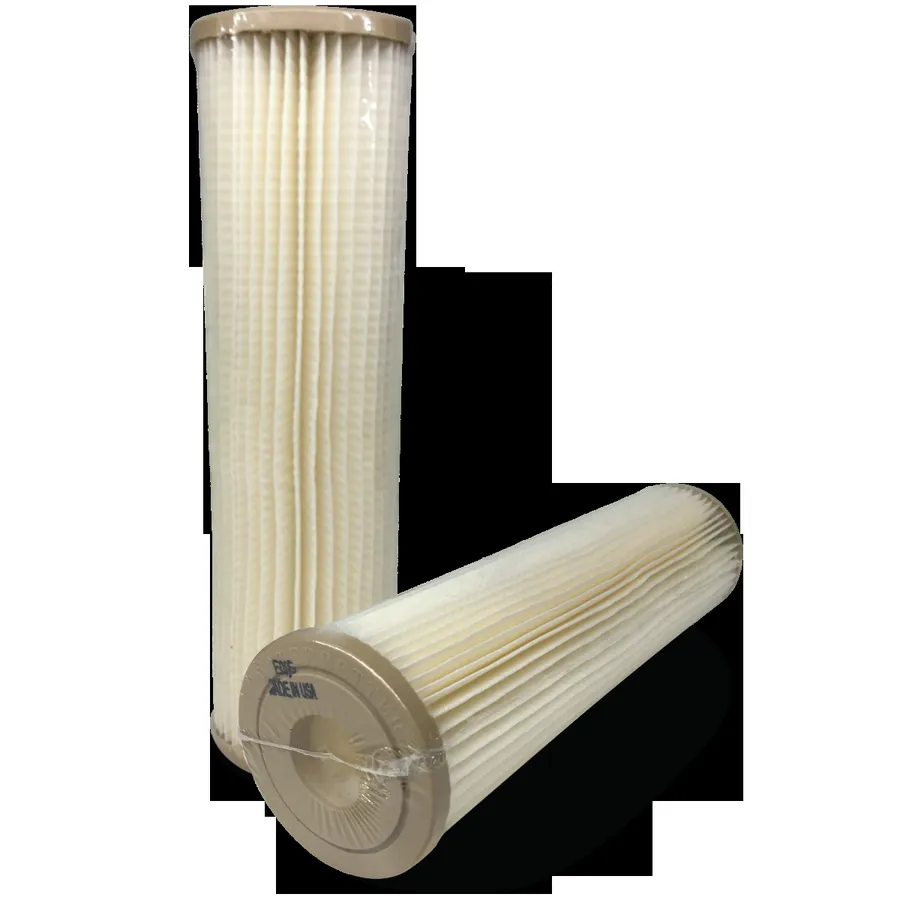
When the feed is gritty and the budget is tight, a string wound filter cartridge wins on cost per liter. Yarn is wound around a core at controlled density, which traps dirt through the whole depth of the wrap. Depth media holds more total dirt than pleats of the same size.
Best for: high-sediment raw water, coolant sumps, and first-stage pre-filtration before finer stages.
Core specs: 1 to 100 micron typical (5 to 50 common). Nominal rating only. Lowest unit cost in this list.
Not for: final filtration, absolute-rated duty, or high flow where pressure drop matters.
The trade-off is precision. A string wound cartridge has a nominal rating, which means "most" particles above the size, with no efficiency guarantee. Run it where a broad removal job is fine, and put a pleated or membrane stage after it.
Winding pattern sets the curve. A tight outer wind and loose inner wind builds a graded pore structure that resists blinding. Polypropylene cores suit most water duty; steel cores handle heat and pressure better. Confirm the core material when you order.
Disposal is a hidden cost. String wound cartridges are single-use by design, so factor waste volume into the cost per year.
Best Reusable Option: Stainless Steel Mesh
Some plants want zero consumables. The best stainless steel water filters for that duty use 304 or 316L mesh around a perforated core, and they clean back to near-new performance. One element survives dozens of wash cycles, which changes the cost math completely.
Best for: continuous process water, hot fluids, backflush systems, and plants with strict disposal rules.
Core specs: 25 to 100 micron typical (finer weaves exist). Material 304 or 316L stainless. Cleanable, typically 50+ cycles.
Not for: sub-25 micron duty, gelatinous or oily contamination, and drinking water polishing where absolute ratings are required.
The catch is removal precision. Mesh sieves by pore size, so the rating is more consistent than nominal depth media, but the micron range is coarse. Keep a disposable cartridge downstream if the process needs fine protection.
Cleaning method decides real life. Backflushing restores flow for coarse dirt. Ultrasonic or acid baths handle oily films that backflushing misses. Plan the cleaning station before you commit, or the reusable claim becomes a maintenance trap.
316L costs more than 304 and resists chlorides better. Choose 316L for seawater or brine contact, 304 for fresh water.
Best RO Protection: 5 Micron Pre-Filter
Reverse osmosis membranes fail on particles, chlorine and scale. A 5 micron water filter cartridge upstream is the standard first defense, and a carbon stage handles the chlorine. Buyers searching for "reverse osmosis filter cartridges" usually need this exact stack.
Best for: RO feed protection, membrane replacement programs, and final particle removal before polishing.
Core specs: 5 micron nominal typical. Melt-blown depth media. Change at 10 to 15 psi pressure drop, typically every 3 to 6 months.
Not for: dissolved solids (the membrane does that), chlorine removal (carbon first), or bacteria control.
The classic setup pairs a 5 micron melt-blown cartridge with a carbon block after it. The melt-blown stage takes the dirt, and the carbon takes the chlorine. An RO filter cartridge of the right micron keeps the membrane from fouling, which protects the most expensive part in the skid.
Membrane protection pays for the skid. A fouled RO membrane costs thousands to replace, while a 5 micron pre-filter costs a few dollars. Operators who log pressure drop across the pre-filter catch problems before the membrane sees them.
Do not skip the carbon stage on chlorinated feed. Chlorine attacks thin-film membranes quickly, and a 5 micron cartridge alone will not stop it. The stack is pre-filter, carbon, then membrane.
Best Replacement Fit: Cross-Brand Interchange
Half the water cartridges bought this year are replacements for an installed element. A water filter cartridge replacement matches OD, ID, length and seal, never just the brand stamp on the old part. Replacement water filter cartridges sourced by dimension cost 30 to 50% below the original brand, typical for well-stocked interchange families.
A GE water filter cartridge from a legacy GE housing cross-references the same way. Send us a GE filter cartridge part number and we will quote the dimensional match and media class before you commit. The same discipline covers dust collector filter cartridges in baghouse retrofit programs.
Best for: plants running OEM elements on budget, legacy housings, and multi-brand filter inventories.
Core specs: matched OD, ID, length, thread and seal. Pricing 30 to 50% below OEM typical. Same media class or better.
Not for: certified-only duty where the original brand is contractually required.
Our liquid filter cartridge range covers the common water and process dimension families. Replacement filter cartridges for those housings ship from stock, and the cross-reference table is verified against original dimensions.
Measure twice, order once. Calipers give you OD and length; the thread and seal need a look at the old element, not the box art. Part numbers on legacy GE housings rarely match the current catalog, so dimension beats brand every time.
Interchange elements also cover hydraulic and air duty, but the water families are the volume movers. Start with the liquid range and expand from there.
Side-by-Side Comparison
The table below compares all eight picks on the specs that drive yearly cost. Intervals assume moderate dirt load and typical operating hours.
| Pick | Media | Typical rating | Change interval | Best for | Not for |
|---|---|---|---|---|---|
| Pleated 10 x 2.5 | Pleated polyester / cellulose | 1 – 50 µm | 3 – 6 months | Standard housings, RO feed | High flow, chloramine |
| Big blue 10 x 4.5 | Pleated polyester | 1 – 50 µm | 3 – 6 months | High-flow lines | 2.5-inch housings |
| Carbon block | Activated carbon | 0.5 – 10 µm | 6 – 12 months | Taste and odor | Sediment, chloramine |
| Catalytic carbon | Catalytic carbon | 5 – 10 µm | 6 – 12 months | Chloramine, distiller feed | High flow, particles |
| String wound | Polypropylene yarn | 1 – 100 µm | 1 – 3 months | Heavy sediment | Precision final duty |
| Stainless mesh | 304 / 316L mesh | 25 – 100 µm | Cleanable | Reusable duty | Fine removal |
| 5 micron melt-blown | Melt-blown PP | 5 µm nominal | 3 – 6 months | RO protection | Dissolved solids |
| Interchange element | Matched to OEM | Per original | Per original | Replacement budget | Certified-only duty |
Confirm every figure against the data sheet before you standardize. Ratings and intervals are typical values, not guarantees.
Read the table by your bottleneck. If pressure drop is the constraint, the big blue row wins. If budget is the constraint, the string wound row wins. If the feed is chloraminated, only the catalytic carbon row applies.
One example ties it together. A plant with chloraminated city water and a 15 gpm line should buy a catalytic carbon element with a string wound pre-filter. The string wound stage takes the dirt cheaply, and the catalytic carbon handles the chloramine. That stack beats any single cartridge on yearly cost.
Selection Checklist & Replacement
Here is how to replace a water filter cartridge in five steps, then the checklist we use before approving any new element.
- Isolate and depressurize — close the inlet valve and open the vent until flow stops.
- Remove the housing — unscrew the bowl or clamp, and lift the old cartridge out.
- Verify the old part — record OD, ID, length, thread and seal before it goes in the bin.
- Fit the new element — wet the O-ring, seat the cartridge, and hand-tighten the bowl.
- Flush and check — open the inlet slowly and watch for leaks and pressure drop.
Those steps show how to replace water filter cartridge elements in any standard housing. Now run the selection checklist before you buy.
- Measure the housing — a cartridge filter cartridge mismatch between model and housing is the classic sample-order catch.
- Confirm media class — pleated for precision, depth for dirt, carbon for taste, stainless for reuse.
- Confirm the micron rating — nominal or absolute, and the flow it is rated at.
- Check the pressure budget — the cartridge must add less than 10 psi at peak flow, typical.
- Match change interval to duty — fixed months plus a pressure-drop check beats guessing.
- Order one sample first — test fit, seal and pressure drop before volume.
- Ask about MOQ and lead time — stock families ship fast; custom media takes longer.
Add a differential pressure gauge if the housing lacks one. The gauge turns a guess into a number, and the number tells you when the element is done. A cartridge changed on signal, not on faith, is the cheapest maintenance habit in this article.
Keep a spare element for every housing in the plant. Downtime for a missing spare costs more than the cartridge itself, usually by an order of magnitude.
Run the checklist twice for critical lines. The second pass catches the seal and micron errors that cause most first-order failures.
The Bottom Line
There is no single best filter cartridge for water; there is a best cartridge per duty. Standard housings get the pleated 10 x 2.5. High flow gets the big blue 10 x 4.5. Chloramine feed gets catalytic carbon, and RO protection gets a 5 micron melt-blown pre-filter.
Buy by dimension and media class, change on a schedule plus a pressure-drop check, and sample before you standardize. PLEATPURE manufactures liquid filter cartridges factory-direct, with cross-brand interchange verified against original dimensions. Browse the liquid cartridge range or send us your old part number for a cross-reference quote.
NEXT STEP
Ready to Switch to Replacement Filter Cartridges?
Send us your element dimensions or part numbers — our team responds within 24 hours with pricing and lead time.
Written by
Ray ChanFiltration Buyer's Guide Author · Industrial Filter Cartridge Specialist. Ray helps global importers, distributors and maintenance teams source factory-direct replacement filter cartridges.