
Bag Filter vs Cartridge Filter: Cost, Precision and Decision Tree
Table of Contents
A coatings plant switched its 50 micron water line from cartridges to filter bags last year. Annual filtration spend dropped by roughly 54%, all numbers typical. Three months later, a second plant moved its 10 micron line the other way. The cartridge upgrade cut their change frequency by two thirds. Both decisions were right. Both came from the same question: bag filter vs cartridge filter, and which one fits the duty.
Search the same question in reverse — cartridge filter vs bag filter — and you find the same confusion. Buyers searching "filter cartridge water" or "water filter cartridge replacement" usually compare sticker prices and stop there. That misses the real math. The honest comparison covers purchase price, removal precision, dirt holding, flow, changeover time and the environment the filter works in. This article compares bag filters vs cartridge filters in factories head to head, with numbers you can verify on your own data sheet. Keep reading for more!
Key Facts at a Glance
- Definition — A filter bag is a fabric pouch that drops into a bag housing. A filter cartridge is a rigid pleated or depth element that seals inside a cartridge housing.
- Cost — Bags typically cost 30 to 50% less per unit (typical). At coarse duty they usually win the annual budget.
- Precision — Cartridges hold 1 to 10 micron ratings reliably. Bags are nominal only, typically 25 to 200 micron in practice (typical).
- Life — At fine ratings a pleated cartridge lasts 2 to 3 times longer than a bag (typical). At coarse ratings a bag holds 2 to 3 times more dirt (typical).
- Changeover — A bag swap takes 5 to 10 minutes (typical). A cartridge change takes 15 to 30 minutes with housing work (typical).
- Rule of thumb — Above 25 micron, bags usually win on cost. Below it, cartridges win on cleanliness and life. Many plants run both.
Bag vs Cartridge: The Core Difference
Both products remove particles from a fluid stream. Both sit inside a housing that forces the fluid through the media. The difference is the media format, and that changes cost, precision and maintenance.
A filter bag is a sewn or welded fabric pouch. Felt or mesh media gives it a high dirt-holding volume at a low price. A filter cartridge is a rigid element with pleated or depth media wrapped around a core. Pleats pack more surface area into the same envelope, which is why filter cartridges keep pressure drop low at fine ratings.
The two also fail differently. A bag ruptures at the seam and dumps its load downstream. A cartridge collapses when over-pressured, with the same result. Both need a pressure-drop check on schedule, and both are cheap compared with the pump or valve they protect.
The deciding factors repeat in every plant: particle size, dirt load, flow, labor cost and disposal cost. Score those five and the choice stops being a brand debate. The rest of this guide gives you the numbers for each factor, then a decision tree that puts them together.
Cost Comparison: Price & Annual Spend
Unit price is the first number buyers see. Filter bags typically cost 30 to 50% less than an equivalent cartridge (typical). The annual number depends on change frequency, and change frequency depends on dirt load and rating. Run the math before you buy either one.
Worked example: four housings, 12 bags each, coarse water duty at 25 micron.
| Cost driver | Filter bag (typical) | Filter cartridge (typical) |
|---|---|---|
| Unit price, 25 micron class | $3.20 per #2 bag | $7.00 per 20-inch element |
| Changes per year, coarse duty | 8 changes, 384 bags | 8 changes, 384 elements |
| Annual media spend | About $1,229 | About $2,688 |
| Disposal | Light fabric, compresses | Heavier cores and end caps |
| Result at 25 micron plus | Roughly 54% lower per year | Cleaner stream at fine ratings |
Check the math. 384 bags at $3.20 (typical) is $1,229. The same duty in cartridges at $7.00 each (typical) is $2,688. The bag route is about 54% lower at 25 micron and coarser. At fine duty the picture flips. A cartridge at 10 micron lasts 2 to 3 times longer than a bag (typical). The cartridge spend per year then drops below the bag spend. The stream gets cleaner too.
Bags win at coarse duty on the annual budget. Cartridges win at fine duty on both cost and cleanliness. The crossover sits near 25 micron, which is why the rest of this comparison matters more than the unit price.
Total cost also includes the pump energy that pressure drop eats. A 0.1 bar difference on a 100 m³/h line wastes roughly 0.28 kW of pumping power (typical). At 8,000 hours a year, that is 2,240 kWh per line. At $0.12 per kWh, a media that runs a lower drop saves about $270 a year in energy alone (typical).
Precision: Micron Ratings & Efficiency
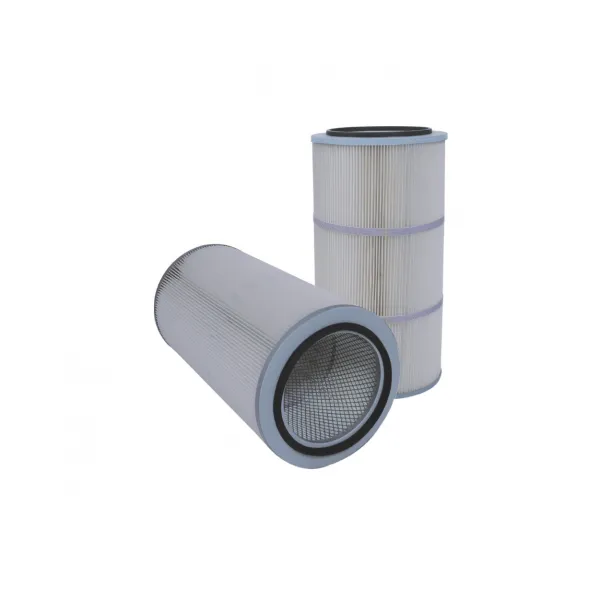
Precision is where the two products stop being interchangeable. A bag rating is nominal: it removes most particles above the stated size, with no guaranteed efficiency. A cartridge can be absolute rated, meaning the largest pore is capped at the stated size and the performance is tested per ISO 16889.
In practice, bags work in the 25 to 200 micron band for most plants. A cartridge filter for water service runs from 0.5 to 100 micron, with pleated media holding 1 to 10 micron duty comfortably. A beta 200 rating at the rated size means 99.5% removal efficiency (typical). No felt bag carries that guarantee.
| Spec | Filter bag | Filter cartridge |
|---|---|---|
| Rating range | 1 to 800 micron nominal (typical) | 0.5 to 100 micron (typical) |
| Working range in plants | 25 to 200 micron | 1 to 25 micron |
| Rating type | Nominal only | Nominal or absolute, beta rated |
| Efficiency at rated size | No guaranteed number | Up to 99.5% at beta 200 (typical) |
| Consistency | Varies with felt grade | Tested per ISO 16889 |
Particle scale makes the gap concrete. A human hair is 70 to 100 micron thick. A red blood cell is about 7 micron. Hydraulic pump damage starts in the 3 to 15 micron band. A bag at 25 micron nominal will not touch that band. A cartridge at 10 micron beta 200 removes 99.5% of it (typical).
A sediment filter cartridge at 10 micron stops particles a 25 micron bag lets straight through. The same logic applies to a sediment water filter cartridge on a raw water line. Put a bag before it for bulk removal. Let the cartridge do the precision work. Below 10 micron absolute, a bag is not an option.
For membrane protection, reverse osmosis filter cartridges and an RO filter cartridge in the carbon or sediment stage are the standard answer. A bag can pre-filter the RO feed, but the final guard is always a cartridge.
Dirt Holding & Service Life
Dirt holding decides how often you change. A felt bag has a thick, open media bed that swallows sediment. At 50 micron and coarser, a bag typically holds 2 to 3 times more dirt than a cartridge of the same rating (typical). That is why high-sediment lines run bags.
At fine ratings the advantage moves. A pleated cartridge packs far more media area into the housing, so it loads more slowly at 10 micron and below. Filter cartridge replacement intervals at fine duty typically run 2 to 3 times longer than a bag at the same micron size (typical).
25 micron is the crossover. Above it, bags change less often per ton of dirt. Below it, cartridges change less often per liter filtered. Both statements are typical for felt bags versus pleated cartridges, and both are why so many plants stage a bag first and a cartridge second.
Change frequency drives the real cost either way. Track differential pressure, not the calendar. When a clean element reads 0.2 bar and the change point is 1.5 bar (typical), the gauge sets the change day.
Flow Rate & Pressure Drop
Flow changes the answer as much as micron size. A clean bag starts with a low pressure drop, typically 0.1 to 0.3 bar (typical), because the media bed is open. A clean pleated cartridge typically sits at 0.2 to 0.5 bar (typical). At coarse duty and high flow, bags keep the pump happier.
Cartridges answer back with stability. Pleated media holds pressure drop flat for most of its life, then rises sharply at the end. A bag climbs steadily as the felt loads, which means more frequent monitoring on heavy lines.
Footprint favors cartridges at fine duty. The same flow at 10 micron needs roughly 40% less housing volume in a cartridge filter housing than in a bag housing (typical). If floor space is the constraint and the duty is fine, the cartridge filter housing wins on footprint alone.
Pump energy ties the two together. A bag saves energy at coarse duty with its low clean drop. A pleated cartridge saves energy at fine duty with a flat curve that holds until end of life.
Changeover Time & Maintenance
Downtime is the hidden cost of every filter change. A bag swap takes 5 to 10 minutes (typical): lift the lid, drop in a fresh bag, close it. A cartridge change takes 15 to 30 minutes (typical). The housing must be opened, the element lifted, and the O-ring checked before the new one seats.
The gap compounds across a year. Teams that learn how to replace water filter cartridge elements recover that time on every change. The bag still wins the labor comparison on weekly duty:
| Factor | Filter bag | Filter cartridge |
|---|---|---|
| Change time per element | 5 to 10 minutes (typical) | 15 to 30 minutes (typical) |
| Tools | None, lift lid, drop in | Wrenches, O-ring inspection |
| Downtime per change, 12-element housing | About 20 minutes | About 45 to 60 minutes |
| Labor per year, weekly changes | Roughly 17 hours | Roughly 43 hours |
| Waste volume | Fabric, compresses flat | Core plus media, denser |
Check the labor math. 52 weekly changes at 20 minutes is about 17 hours a year. The same schedule at 50 minutes average is about 43 hours. Water filter cartridge replacement cost is mostly labor. Plants with high change frequency and paid overtime lean toward bags.
Application Scenarios: Who Wins Where
Duty decides, and duty is measurable. The table below is the short version of this whole comparison, mapped to the applications plants actually run.
| Duty | Best choice | Why |
|---|---|---|
| High sediment water, 50 micron plus | Filter bag | More dirt per change, lower cost |
| Fine final filtration, 10 micron or less | Filter cartridge | Precision, beta rated, longer life |
| Reverse osmosis protection | Cartridge | Sediment plus carbon in one housing |
| Paint and coolant loops | Filter bag | Fast swap between color changes |
| Food and beverage | Cartridge | Sealed element, food-grade media |
| Hydraulic and servo systems | Cartridge | Absolute ratings, ISO 16889 tests |
Paint and coolant loops change bags between batches, sometimes twice a shift. Food plants want the sealed cartridge, because an open bag is a contamination risk on the line. Hydraulic systems need absolute-rated cartridges, and a bag simply cannot carry a beta claim.
Raw water treatment usually runs both. Liquid filter bags handle bulk sediment. A sediment water filter cartridge and a carbon stage do the final polish. The bag cuts the dirt load. The cartridge protects the membranes.
Dust Collector Bags vs Cartridges
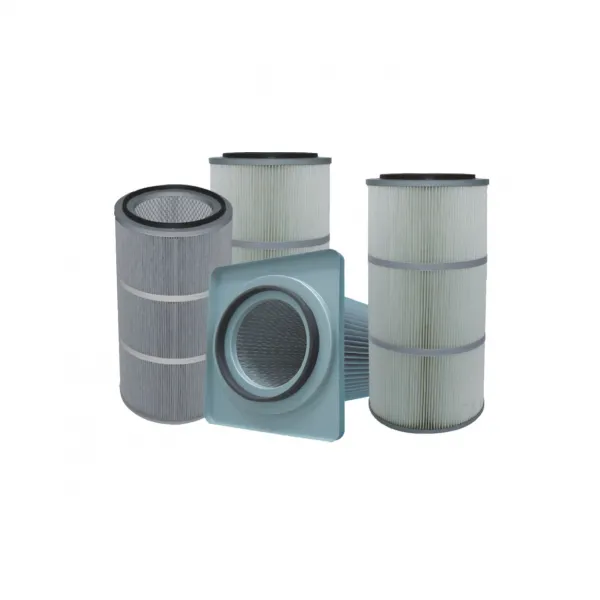
The same bag-versus-cartridge logic applies to air, with a different environment. Dust collector filter bags are felt or woven fabric tubes. Dust collector filter cartridges are pleated elements that pack 2 to 3 times more media area per tube (typical).
A filter bag dust collector is the classic low-cost choice for high dust loads and abrasive dust. A dust cartridge filter is the retrofit answer when space is tight or the dust is fine. Industrial dust collector filter bags still dominate cement and grain duty, while dust collector cartridge filters take over welding fume and fine powder service.
| Factor | Dust collector filter bags | Dust collector filter cartridges |
|---|---|---|
| Media | Felt or woven fabric | Pleated cellulose or polyester |
| Media area per tube | Base area only | 2 to 3 times more (typical) |
| Cleaning | Pulse jet or shaker | Pulse jet, lower air-to-cloth ratio |
| Fine dust capture | Good to 1 micron (typical) | Good to 0.5 micron (typical) |
| Temperature and abrasion | Better, 200°C class with special fabrics (typical) | Lower limits, 100°C class (typical) |
| Life at fine dust | Baseline | 2 to 3 times longer (typical) |
Environment decides here more than price. Hot, abrasive or chemically aggressive air favors a dust filter bag with the right fabric. Fine, sticky or space-constrained dust favors a cartridge filter for dust collector service. The extra media area holds more before the pulse jet has to work.
Cleaning cycle is the maintenance difference in air duty. A pulse jet fires every few minutes on heavy dust, and each firing wears the media a little. Cartridges survive more cleaning pulses per dollar of media (typical). That is the real reason fine-dust plants report 2 to 3 times longer cartridge life.
Retrofit is common in both directions. A cartridge filter for dust collector upgrade cuts vessel count in half for the same airflow (typical). A dust collector cartridge filter retrofit into an old baghouse doubles media area without new ductwork.
Housing Fit & Retrofit Options
The housing decides what you can drop in today. A cartridge filter housing seals each element with O-rings and a threaded or bayonet cap. A bag housing is an open vessel with a basket and a quick-open lid. The two are not interchangeable without a conversion.
Conversions exist in both directions. Bag housings can take pleated filter bags, which add pleats to a bag format for more surface area at bag-change speed. Cartridge housings can run depth or pleated elements of the same OD, ID and length family. FSI bag filters follow the standard #1 and #2 sizing, so industrial filter bags swap across housings that respect that standard.
Measure before you convert. Bag baskets have a fixed diameter and depth. Cartridge housings have a fixed seal spacing. A "fits the same flow" claim means nothing until the basket or the seal ring is measured.
Seal style is the second check. Bag housings use a gasket at the basket flange. Cartridge housings use O-rings at each element end. Convert a bag housing to cartridges only with an adapter basket that reproduces the seal spacing. Convert the other way only if the vessel can take the bag depth.
Replacement & Sourcing Checklist
Replacement buying repeats the same traps. A filter cartridge replacement is matched by outer diameter, inner diameter, length, seal and media class. Replacement water filter cartridges are no different, and a cartridge filter cartridge mismatch — cartridge model versus housing model — is the classic sample-order catch.
Run this checklist before any order:
- Measure or read the old element — OD, ID, length, seal type.
- Confirm the micron class — nominal for bags, nominal or absolute for cartridges.
- Check the housing model — basket size for bags, seal spacing for cartridges.
- Confirm operating temperature and pressure — both are rated, not guessed.
- Order one sample first — fit, seal and pressure drop beat any spec sheet.
A cartridge filter manufacturer that quotes media class and test standard is safer than one that quotes length and price only. Liquid filter bags are stocked in FSI sizes. A liquid filter bag order needs the housing basket diameter plus the bag length. Micron number alone is not enough.
Lead time and MOQ close the deal. Stock FSI bag sizes ship fast. Custom cartridge builds need tooling time, often 2 to 4 weeks (typical). Order a sample first either way, and keep the housing model number on file for the next quote.
PLEATPURE builds both sides of this comparison. See our filter bag range for felt and pleated bags in standard sizes. Our liquid filter cartridge range covers pleated elements with tested media classes. Send us your housing model or old part number, and we will quote the matching element.
The Decision Tree: Bag or Cartridge
Use this tree in order. Each step kills one option, and the first "yes" usually decides the purchase.
- Start with particle size — below 10 micron absolute, choose cartridge. A bag cannot guarantee it.
- Check the dirt load — heavy sediment at 50 micron plus? Choose bag, and stage a cartridge after it if the line needs fine polish.
- Count the changes — more than one change per week? Choose bag, because changeover labor will dominate the cost.
- Check the environment — hot, abrasive or chemical duty? Choose bag with the right fabric. Fine or sticky dust? Choose cartridge.
- Check the space — floor space tight at fine duty? Choose cartridge, roughly 40% smaller housing volume (typical).
- Check the stream value — food, hydraulic or membrane protection? Choose cartridge, and never negotiate on precision.
If the answers split, run both. A bag first stage plus a cartridge final stage is the most common two-filter design in liquid plants. The same pairing works in dust collectors. Start with particle size, then let cost break the tie.
The Bottom Line
A bag and a cartridge remove particles, and that is where the similarity ends. Bags win on unit price, coarse-duty dirt holding, high flow and changeover speed. Cartridges win on precision, fine-duty life, disposal volume and footprint. The crossover sits near 25 micron, and the environment decides the dust collector version.
Score the five factors — particle size, dirt load, flow, labor and disposal — before you compare quotes. Buy bags for bulk, cartridges for precision, and stage both when the line demands it. PLEATPURE manufactures filter bags and liquid filter cartridges factory-direct, with media classes quoted on the data sheet and samples shipped before volume orders. Browse the filter bag range or send us your housing model for a matched quote.
NEXT STEP
Ready to Switch to Replacement Filter Cartridges?
Send us your element dimensions or part numbers — our team responds within 24 hours with pricing and lead time.
Written by
Ray ChanFiltration Buyer's Guide Author · Industrial Filter Cartridge Specialist. Ray helps global importers, distributors and maintenance teams source factory-direct replacement filter cartridges.