
Dust Collector Cartridge Guide 2026: Cartridge vs Baghouse Buying Manual
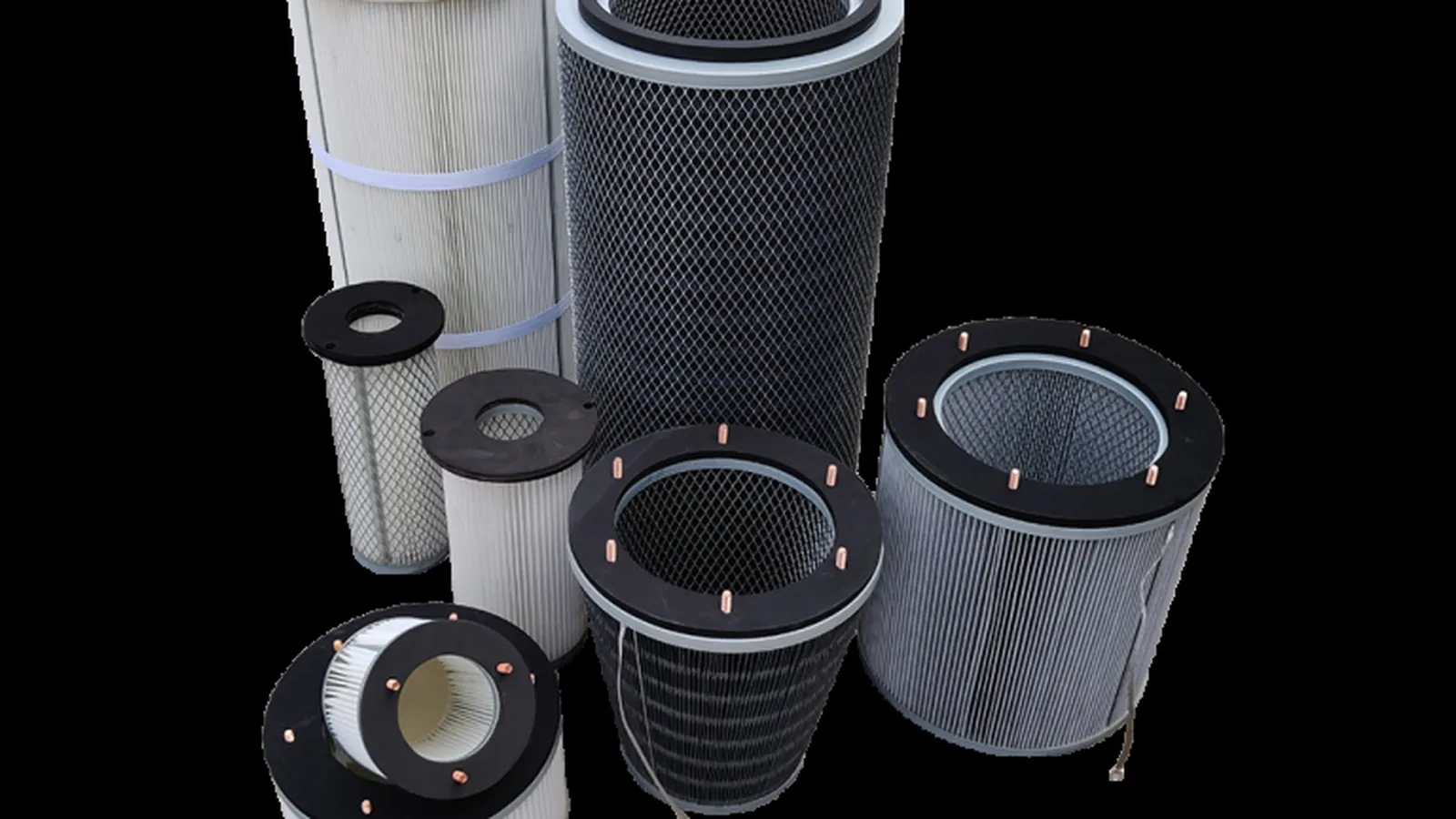
Table of Contents
A food plant in Ohio lost twelve hours of production when a dust collector cartridge collapsed in its housing. The pleats packed solid with flour dust. The pulse-jet could not clean them. The fan kept pulling air through the gap around the failed cartridge. Between the shutdown, the overtime crew and the rush shipment of replacement cartridges, the bill crossed $19,000. All of it traceable to one filter that nobody changed on a pressure-drop reading.
Industrial dust collector filters are the cheapest insurance between your process and the stack. Whether you search dust collector filter cartridges, dust collector filter bags or cartridge dust collectors, the question underneath is the same. Which element fits my collector, and how long will it actually last? This guide compares pleated cartridge collectors with baghouse systems. It explains pulse-jet cleaning, filter media and pleat spacing. It covers typical EPA and MACT emission limits. And it walks through a sizing calculation you can repeat with your own numbers. Keep reading for more!
Key Facts at a Glance
- Definition — A dust collector filter cartridge is a pleated, replaceable element that captures dust from process air.
- Cleaning — Pulse-jet bursts of compressed air clean the media at a set differential pressure, typically 3 to 5 in. w.g. (typical).
- Media — PTFE membrane, polyester felt and cellulose cover most duties; temperature and chemistry decide the choice.
- Efficiency — Pleated cartridges commonly reach 99.9% collection on fine dust and meet typical EPA MACT outlet levels.
- Area — A 325 mm by 660 mm cartridge packs roughly 20 ft² of media, two to three times a bag in the same footprint (typical).
- Replacement — Change on differential pressure, not the calendar; most plants replace cartridges every 1 to 3 years (typical).
Cartridge Collector vs Baghouse
Two dust collection families dominate industrial air cleaning. The baghouse hangs fabric bags over a tube sheet. The cartridge collector bolts pleated cartridges into a housing. Both rely on the same physics: dirty air passes through media, dust stays behind, and a cleaning pulse drops the cake into a hopper.
A dust collector bag in filtration process equipment seals at the tube sheet with a snap ring or gasket. Cartridge filters for dust collectors deliver two to three times the media area of bags in the same footprint (typical). That extra area means a lower air-to-cloth ratio, lower pressure drop and finer collection for the same air volume.
| Feature | Pleated cartridge | Baghouse bag |
|---|---|---|
| Media area per footprint | High (pleats) | Lower |
| Air-to-cloth ratio (typical) | 1.5:1 to 4:1 ft/min | 3:1 to 6:1 ft/min |
| Outlet efficiency (typical) | 99.9%+ with PTFE membrane | 99.5%+ with good felt |
| Pressure drop (typical) | 2 to 5 in. w.g. | 3 to 6 in. w.g. |
| Fine dust handling | Excellent | Good |
| Change-out labor | Lower | Higher |
| Disposal volume | Lower | Higher |
| Unit cost (typical) | Higher | Lower |
| Best for | Fine, sticky, high-value dust | Coarse, high-volume dust |
1. Baghouse systems
Baghouses are the older, proven workhorse. Filter bags for dust collectors are measured by diameter and length, typically 4 to 8 inches by 6 to 12 feet (typical). Bags cost less per unit and handle high volumes of coarse dust well. The trade-offs are lower media density, higher air-to-cloth ratios and more change-out labor. A filter bag dust collector retrofit keeps the housing and swaps the internals.
2. Cartridge collectors
Cartridge dust collector filters dominate new installations for fine and hazardous dust. A cartridge packs pleated media into a rigid frame with an integral gasket. The result is better collection efficiency and a smaller collector footprint for the same airflow. The filters dust collector operators choose today are mostly pleated cartridges.
3. Which one wins
Choose bags for very high volumes of coarse, dry dust and tight budgets. Choose a cartridge collector for fine dust, sticky dust, explosive dust or limited floor space. Many plants run both: a bag filter dust collector upstream for bulk loading, and a cartridge unit downstream for final polishing.
Footprint economics explain the shift. A cartridge collector doing 12,000 CFM can sit in about half the floor space of a baghouse doing the same duty (typical). Floor space costs money in a crowded plant, and so does insulation. Cartridge housings are compact and ship assembled, which shortens installation time on site.
How a Dust Collector Cartridge Works
The dust collector air filter cartridge does three jobs: capture dust, release it on command and hold its seal. Dirty air enters the collector and flows through the pleated media. Particles lodge on the surface and build a dust cake. The cake, not the media alone, does much of the filtering.
Pulse-jet cleaning is what separates a good collector from a clogged one. The system fires short bursts of compressed air, typically 90 to 100 psi, down the cartridge throat (typical). The burst reverses the flow for a split second and flexes the pleats. The dust cake cracks off and falls into the hopper below.
A timer or a differential pressure switch triggers the pulses. Set the trigger too late and the cake compacts and blinds the media. Set it too early and you waste compressed air and wear the media faster. A typical clean cartridge runs at 0.5 to 1.5 in. w.g., and cleaning fires around 3 to 5 in. w.g. (typical).
Capture happens in two stages. Large particles hit the media face and stop there. Small particles follow the air stream into the cake and lodge between fibers. The cake grows until the pulse fires, then the whole layer releases at once. This cycle, build and release, is the rhythm every collector runs on.
Filter Media: PTFE, Polyester & Cellulose
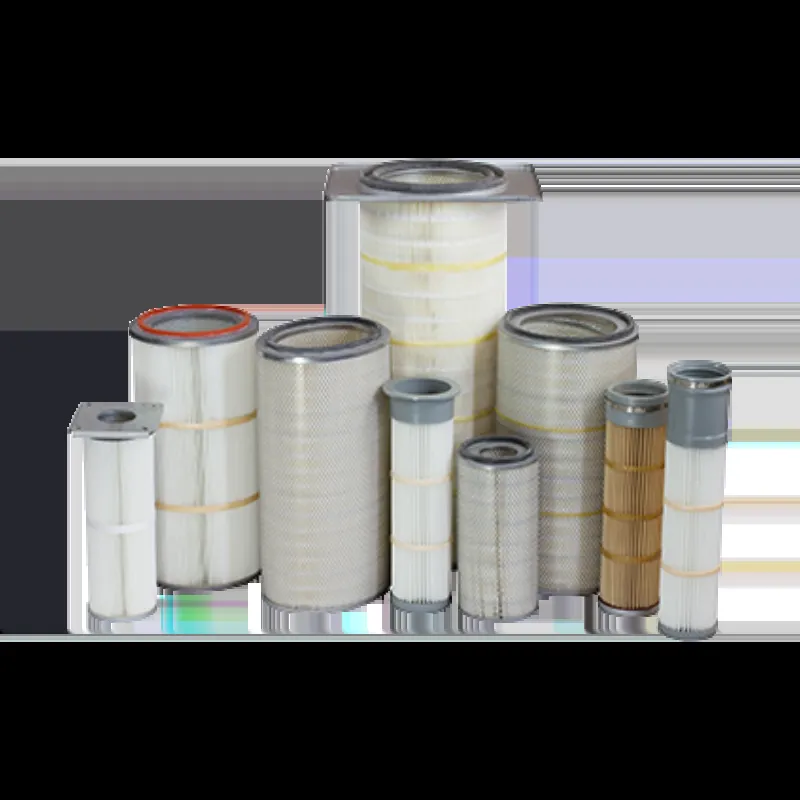
Media choice sets the temperature limit, the efficiency and the price of the whole system. Three media families cover most industrial dust collector filters in service today. The table below is a starting point, not a spec sheet.
| Media | Max temp (typical) | Best for | Notes |
|---|---|---|---|
| Cellulose (paper) | ~135 °C | Coarse, dry dust | Lowest cost |
| Polyester felt | ~150 °C | General baghouse duty | Moisture resistant |
| Polyester + PTFE membrane | ~150 °C | Fine, sub-micron dust | 99.9%+ efficiency |
| Polypropylene felt | ~90 °C | Chemical fume | Acid resistant |
| Meta-aramid (Nomex style) | ~200 °C | Hot process air | Heat resistant |
1. Cellulose
Cellulose cartridges are the economy option for coarse, dry dust below 135 °C (typical). They filter well at moderate loads and cost the least. The downside is poor moisture resistance and faster blinding.
2. Polyester felt
Polyester felt is the default for baghouse bags. It resists moisture and mild chemicals up to about 150 °C (typical). A dust collector filter felt heatset recycled polyester grade adds heat-setting for dimensional stability and uses recycled fiber to cut cost. Industrial dust collector filter bags in this construction dominate general factory duty.
3. PTFE membrane
A PTFE membrane laminated over polyester or a scrim captures sub-micron particles at the surface. Collection efficiency reaches 99.9% or better (typical). Membrane cartridges cost more, but they hold their pressure drop longer on fine, sticky dust like weld fume and carbon black.
Do not pick media on price alone. Match the temperature limit to the process air, and match the chemistry to the dust. Dust collector filter cartridge manufacturers publish both numbers on their data sheets.
Felt versus woven is the other choice for bags. Woven cloth is thin, cheap and lets dust pass until a cake builds. Felt has a thicker mat of fibers that filters from the first minute. Most industrial dust collector filter bags sold today are felt, because felt holds a stable cake and cleans more evenly (typical).
Pleat Spacing & Cartridge Design
Pleats give a cartridge its surface area, but spacing decides whether that area stays usable. A 325 mm by 660 mm cartridge typically carries 40 to 60 pleats with 5 to 15 mm of spacing between them (typical). Tight pleats pack more media, yet dust can bridge across narrow gaps.
When dust bridges, the pulse cannot reach the pleat root. The bridged area stops filtering and the effective area shrinks. That is why cartridge suppliers tune pleat depth and spacing to the dust. Sticky or fibrous dust needs wider spacing; fine dry dust tolerates tighter pleats.
Pleat lock is another design detail. Some cartridges stitch or glue the pleat tips to hold them open. A locked pleat keeps its shape through hundreds of pulse cycles. Unlocked pleats can splay and let dust pack between them. Dust collector cartridge filters with welded seams resist abrasion better than glued ones.
Efficiency, EPA & MACT Emission Limits
Collection efficiency matters at the outlet, not just on the data sheet. A well-run cartridge collector commonly reports 99.9% collection on fine dust (typical). The legal question is what the stack may emit.
US EPA rules under the NESHAP and MACT programs set outlet limits by source category. Typical permit levels for particulate fall between 0.005 and 0.03 grains per dry standard cubic foot, roughly 10 to 70 mg/m³ (typical). EU industrial rules commonly allow 10 to 50 mg/m³ for new plants (typical). Your local permit, not a general guide, is the number that binds.
| Parameter | Typical level | Notes |
|---|---|---|
| EPA MACT / NESHAP outlet PM | 0.005 to 0.03 gr/dscf | Varies by source category |
| EU industrial PM limit | 10 to 50 mg/m³ | New plants |
| Stack opacity | 5 to 20% | Permit dependent |
| Cartridge collection efficiency | 99.9% or better | PTFE membrane |
Typical values are shown for context; confirm the limit in your own permit before sizing equipment.
1. Why the membrane matters
Felt media collects mostly on the surface once the cake forms. A PTFE membrane collects at the membrane face even before a cake exists. That makes membrane cartridges the safe choice for sub-micron dust and for opacity-limited permits.
2. Leak detection
A single failed gasket can push outlet readings past the limit. Broken bag detectors, triboelectric monitors and opacity meters are the usual tools (typical). Budget for one, because invisible leaks are the most common permit failure.
Opacity meters measure light through the stack gas. A clean stack reads near zero; a failed collector reads high and fast. Opacity is not a mass measurement, but it is cheap and continuous. Many permits use opacity as the daily check and a stack test as the annual proof. Cartridge collectors with PTFE membrane media usually pass both without drama (typical).
Sizing & Selection Calculations
Sizing a collector is arithmetic once you know three numbers: airflow, target air-to-cloth ratio and media area per cartridge. Here is a worked example with typical values.
1. Air-to-cloth ratio
Air-to-cloth ratio is airflow divided by media area, expressed in feet per minute. Fine and sticky dust needs a lower ratio, typically 2:1 to 3:1 for a cartridge collector (typical). Coarse dry dust tolerates 4:1 and above.
2. Media area
Plant exhaust runs 12,000 CFM. Target ratio is 3:1 ft/min. Required media area is 12,000 divided by 3, which is 4,000 ft². A standard 325 mm by 660 mm cartridge offers about 20 ft² of media (typical). That means 4,000 divided by 20, or 200 cartridges.
3. Cartridge count and cost
Arrange 200 cartridges across, say, ten collectors of 20 cartridges each. At $32 per cartridge (typical), a full set costs 200 times 32, or $6,400. Change twice a year and element spend is about $12,800 per year. Compare a baghouse at a 6:1 ratio: 2,000 ft² of bags, about 128 bags at $9 each, roughly $1,150 per set. Bags are cheaper per set, yet they often change three times a year and take more labor and disposal volume.
Run the same math with your own airflow, your own ratio and your own prices. The collector that wins on paper is usually the one that wins in the plant.
Check the filter velocity before you sign the order. Filter velocity is the air speed through the media face, and it should sit well below the manufacturer limit for the dust (typical). High velocity forces fine dust deeper into the media, where pulses cannot remove it. Keep the velocity low and the life long.
Applications by Industry
The right cartridge depends on the dust, the temperature and the permit. These are the common patterns:
- Woodworking — coarse sawdust plus fine sanding dust; polyester cartridges at 1 to 5 micron (typical).
- Welding fume — sub-micron fume; PTFE membrane cartridges with spark protection.
- Food and feed — flour, sugar and grain dust; food-grade polyester felt with spark arrestors.
- Cement and minerals — abrasive dust; heavy felt bags or cartridges with abrasion guards.
- Pharmaceutical — fine active dust; HEPA-grade final filters behind the primary collector.
- Chemical — corrosive fume; polypropylene or PTFE media matched to the chemistry.
If your dust is explosive, add a deflagration vent or a suppression system before you buy media. Welding fume needs an air filter dust collector with spark protection upstream. Industrial dust collector bags for coarse duty run woven or needled felt. Dust collector filter replacement kits and retrofit cartridges are available for most major brands. See our dust collector cartridge range for the cartridge families we manufacture.
Baghouse conversions are a growing retrofit. Many plants keep the old housing and replace bag cages with cartridge adapters. The upgrade lifts efficiency without a new foundation. Ask your supplier whether your housing accepts an adapter before you budget a new collector.
Replacement Intervals & Change-Out Signs
No calendar fits every plant, because dust load varies by shift and season. Differential pressure is the honest clock. Plan a cartridge change when the pressure drop stays high after cleaning, typically 4 to 6 in. w.g. on a cartridge collector (typical). Most plants replace cartridges every 1 to 3 years and bags every 2 to 5 years (typical).
Watch for these failure signs:
- Pressure drop climbing despite clean pulses — the media is blinded.
- Dust escaping at the clean-air plenum — a gasket leak or a torn pleat.
- Visible dust around the hopper — worn seals or a blocked discharge.
- Cartridge collapse or pleat splay after a change — wrong media or wrong cleaning pressure.
Replacement dust collector filters must match the original dimensions and gasket style. Dust collector replacement filters arrive matched to the original cartridge, with the same OD, length and gasket style. A dust collector filter replacement kit usually includes cartridges, gaskets and a cleaning checklist. A dust filter cartridge is rated by media area, efficiency and gasket style. The dust collector filters cartridge and the bag families are not interchangeable, so order the exact format you already run.
Pulse-Jet Cleaning & Maintenance
A collector fails slowly, and the first symptom is usually money. Compressed air cost rises, pressure drop rises, and production slows. A simple maintenance routine keeps the system honest:
- Check pulse pressure monthly, typically 90 to 100 psi at the header (typical).
- Listen for leaking solenoid valves; a stuck valve wastes air and skips cleaning.
- Empty the hopper on schedule; a full hopper re-entrains dust.
- Inspect gaskets at every change-out; replace any that are cracked or compressed.
- Watch the outlet monitor; a jump in opacity means a leak.
Dust bags for dust collector systems deserve the same attention as cartridges. Some plants still run older dust collectors bags with reverse-air cleaning. Dust filter bags in felt last longer if the pulse timing matches the dust load. Pre-coating new cartridges with lime or the process dust protects the media during startup (typical). A dust cartridge filter that is blinded past its limit cannot be saved by more pulses.
Track costs per month, not per change. Compressed air, elements, labor and disposal add up quietly. A plant that logs pulse pressure and pressure drop each week spots trouble early. The log also gives you the evidence to change suppliers when the numbers drift.
Buying Checklist
Before you place an order, run this checklist:
- Measure the old cartridge — OD, length, flange or gasket style.
- Confirm the media — temperature limit and chemistry of the dust.
- Confirm the rating — micron rating and efficiency, nominal or absolute.
- Check the cleaning system — pulse pressure and interval match the media.
- Ask for the air-to-cloth curve — compare media area, not just price.
- Order one sample first — test fit, seal and pressure drop before volume.
- Ask about MOQ, lead time and disposal — they change the yearly cost.
Filter bags for dust collectors are quoted by diameter and length. Cartridge filters for dust collectors are quoted by OD, length, media and gasket. A good industrial dust collector filter supplier publishes both dimensions and test data. Dust collector filter cartridge manufacturers who test per standard methods are safer partners than those who quote only a price.
Ask for the gasket material too. A urethane or nitrile gasket handles temperature and dust chemistry differently. The gasket is the most common leak point, and the cheapest to specify correctly at order time.
Common Mistakes Buyers Make
- Buying by brand instead of by dimension — the old part number is not the spec; measure it.
- Going finer than the dust requires — a 0.5 micron membrane on coarse dust costs money and blinds faster.
- Skipping the sample order — a cartridge filter for dust collector housings differs across brands in flange geometry.
- Ignoring the cleaning system — new media cannot fix a weak pulse or a dead solenoid.
- Stretching change intervals — a collapsed cartridge dumps its dust cake straight to the outlet.
Each mistake shows up as a permit notice, a fan repair or a production stop. A spec sheet and a ruler prevent all of them.
One more mistake deserves a mention: buying on price per unit alone. Two cartridges with the same part number can carry very different media areas. Compare media area, efficiency and gasket quality, and the cheap unit often stops looking cheap.
The Bottom Line
A dust collector cartridge is a small part with an outsized job: keep the process air clean, the stack compliant and the fan protected. Match the media to the dust and temperature. Match the pleat spacing to the cleaning system. Size the collector with real airflow numbers, and change elements on pressure drop, not habit.
PLEATPURE manufactures pleated dust collector cartridges and filter bags factory-direct, with dimensions, media and gaskets matched to the major collector brands. Every element is checked for dimension, seal integrity and media integrity before it ships. Browse the dust collector cartridge range or send us your part number for a cross-reference quote.
NEXT STEP
Ready to Switch to Replacement Filter Cartridges?
Send us your element dimensions or part numbers — our team responds within 24 hours with pricing and lead time.
Written by
Ray ChanFiltration Buyer's Guide Author · Industrial Filter Cartridge Specialist. Ray helps global importers, distributors and maintenance teams source factory-direct replacement filter cartridges.