
Strainer vs Filter: What Is the Difference and When to Use Each
Table of Contents
A refinery's cooling water pump failed twice in the same quarter last year. Both times the maintenance log said the same thing: a valve seat was scored by a 0.8 mm chip that a strainer should have caught. The strainer was there. The problem was the screen — 100 mesh on a line full of welding debris — so it plugged in a week, got bypassed, and the pump ate the next piece of debris.
That failure is the whole strainer-vs-filter debate in one story: a strainer protects, a filter polishes, and using one where the other belongs costs real money. If you have ever searched "strainers vs filters industrial water treatment", "strainers vs filters industrial water treatment systems", or "difference between strainers and filters industrial applications", this guide gives you the decision. Industrial strainers and filters both guard your line; knowing which one guards which threat is the entire job. Keep reading for more!
Key Facts at a Glance
Before the details, the six numbers that settle most arguments: strainers catch 20 micron and above, filters go sub-micron; strainers are cleaned, filters are replaced; a clean strainer adds under half a psi, a loaded filter can add fifteen; and the series of both always beats either one alone. Keep those six facts and the rest of this guide is just the reasoning behind them.
- Removal range — Strainers catch particles above roughly 20 micron; filters go down to sub-micron.
- Cleanability — Strainer screens are cleaned and reused; filter media is replaced when loaded.
- Pressure drop — A clean strainer adds under 0.5 psi (typical); a loaded filter can add 15 psi or more.
- Cost per year — A strainer costs little after purchase; a filter is a recurring consumable cost.
- Best practice — Run a strainer upstream of a filter: bulk debris out first, fine particles second.
- Common mistake — Using a filter as a strainer, or a strainer as a filter, both fail in different ways.
What Is a Strainer
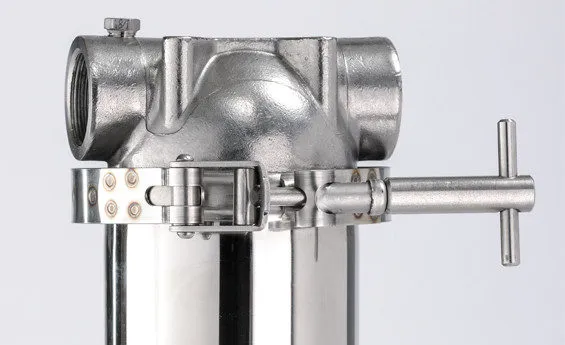
A strainer is a coarse filtration device installed in a pipeline to protect downstream equipment. It removes large particles — chips, scale, weld slag, thread tape — before they reach pumps, valves, nozzles, meters or filters. The working element is a screen or perforated basket that is cleaned and put back, not thrown away. If you search "what is the strainer" or "what is strainer" online, the definition is the same everywhere: a reusable, coarse protection device, not a consumable.
1. Basket strainer designs
A basket strainer holds a large cylindrical basket, giving high debris capacity and low pressure drop; it suits water, oil and process lines where bulk debris is expected. Industrial basket strainers typically come in cast iron, carbon steel, 304 or 316 stainless steel, with flanged, threaded or welded connections per ASME B16.5 (typical). The basket itself is often a stainless steel strainer basket industrial grade — a stainless steel strainer basket in an industrial rating, with a perforated liner and a fine mesh liner for finer work.
2. Y-type and duplex designs
A Y-type strainer packs a small screen into a compact Y-shaped body, suits tight spaces and steam or gas lines, and needs frequent cleaning because the screen area is small. A duplex y strainer (or duplex basket design) carries two chambers and switches flow while the off-duty basket is cleaned — the right answer for continuous lines. Automatic self cleaning strainers go further: a scraper or backflush cycle clears the screen on a timer or differential pressure signal, which is why automatic self cleaning strainer specs appear in municipal and industrial water intake designs.
3. What a strainer does and does not do
So what does a strainer do exactly? It stops particles above its screen opening — nothing finer. A filter strainer or basket filter strainer behaves the same way: the coarse screen does the work and the unit is cleaned, not discarded. That is also why the "strainer vs filter" question keeps coming up: both devices sit in the same pipeline position, but they answer different questions. A strainer used for bulk protection is cheap to run; a strainer used for fine polishing is a false economy, because the screen simply cannot hold sub-micron dirt.
What Is a Filter
A filter is a fine filtration device that removes small particles down to micron and sub-micron levels. Where a strainer stops visible debris, a filter stops the invisible stuff — the 5 micron grit that scores a hydraulic pump, the bacteria that contaminates a beverage, the carbon fines that blind a membrane.
Filter media comes in many forms: pleated cartridges, melt-blown depth cartridges, string-wound cartridges, filter bags, membrane cartridges. The media is replaced, not cleaned, when it reaches its pressure-drop limit or service interval. That makes filters a recurring consumable cost, but it is the price of precision: a filter holds far more fine particles per dollar than any screen could, and it does so at a defined efficiency.
Filter performance is quoted by micron rating and beta ratio. A nominal rating means "most" particles above the size are removed. An absolute rating (tested per ISO 16889 or ISO 2942) means the largest pore is capped at that size. A filter with β10(c) = 200 removes 99.5% of 10 micron particles — precision a strainer screen cannot match.
Core Differences Table
| Dimension | Strainer | Filter |
|---|---|---|
| Removal range | ~20 micron and above (typical) | 0.1 to 100 micron |
| Element life | Indefinite — screen cleaned and reused | Replaced at pressure-drop limit or interval |
| Efficiency guarantee | Nominal screen opening | Beta ratio per ISO 16889 (absolute) |
| Clean pressure drop | < 0.5 psi (typical) | 2 to 10 psi depending on media |
| Maintenance | Open, clean, reinstall | Remove, replace, dispose |
| Recurring cost | Negligible | Consumable element cost |
| Job | Protect equipment from bulk debris | Meet a cleanliness specification |
Maintenance: Clean vs Replace
The maintenance rhythm is where the two devices differ most in practice. A strainer's maintenance is a cleaning task: open the lid, lift the basket, rinse or brush the screen, check for damage, reinstall. On a clean water line a 40-mesh basket might go months between cleanings; on a commissioning line it may need daily attention for the first week. The labor is minutes and the only spare part is a gasket.
A filter's maintenance is a replacement task with a consumable cost. The element is changed when the differential pressure hits the change point (typically 10 to 15 psi above the clean reading) or when the service interval arrives. The old element is disposed of — some media counts as hazardous waste — and a new one is fitted. That is why the "difference between strainer and filter" matters to a maintenance planner: one device feeds the wash bay, the other feeds the purchasing budget.
Which raises the practical question buyers keep asking — "filter vs strainer, which is cheaper?" A filter strainer or basket strainer costs little per year after purchase. A filter costs its element price every cycle. But the filter does a job the strainer cannot do. The honest answer is that industrial water strainers and filters are not substitutes; they are complementary stages, and the maintenance plan should reflect both rhythms.
Cost Comparison
Worked example. A 100 GPM water line running 24/7 with moderate debris:
| Item | Strainer route | Filter-only route |
|---|---|---|
| First purchase | $300 basket strainer (typical) | $400 housing + $30 cartridges |
| Year 1 consumables | $0 (cleaning labor only) | $360 (12 cartridges at $30) |
| Year 3 total | ~$320 + labor | ~$1,480 |
| Risk | Fine particles still pass | Cartridge plugs fast with bulk debris |
The numbers flip when you need fine removal: a strainer simply cannot do 5 micron absolute, so a filter is not optional there. The real cost comparison is strainer + filter in series versus filter alone. The strainer catches the bulk load, the filter element lasts 2 to 3 times longer, and the combined year cost lands below the filter-only route. Typical pricing illustration — request a quote for your line.
Two real-world examples make the economics concrete. A food plant running 50 GPM of cooling water with heavy scale debris switched from a filter-only setup (element changes every 10 days, $480 a year) to a duplex basket strainer plus the same filter (element changes every 60 days, $120 a year). The strainer paid for itself in the first quarter. A hydraulic shop with a 5-micron requirement tried a 200-mesh strainer to avoid element cost; the pump cavitated on the suction side and the shop replaced a $900 pump. The strainer was removed, a proper suction strainer plus return filter went in, and the shop stopped losing pumps.
Application Map
| Application | Device | Why |
|---|---|---|
| Pump suction line | Strainer (suction basket) | Protect the pump; cleanable without line shutdown if duplex |
| Hydraulic tank suction | Hydraulic tank suction strainer | Coarse screen on the tank return or suction; fine work left to the pressure filter |
| Cooling water main | Duplex basket strainer | Continuous duty; switch baskets while cleaning |
| Municipal / industrial intake | Industrial water strainer | Automatic self-cleaning types for unattended intake duty |
| Sanitary / food line | Sanitary basket strainer | Filter and strainer installation requirements in sanitary systems demand polished 316L, tri-clamp ends and crevice-free baskets |
| Steam line | Y-type strainer | Compact, in-line, metallic screen |
| Hydraulic system | Filter cartridge (return/pressure) | 5-25 micron cleanliness required |
| Process water final | Filter cartridge or bag | Meet product or equipment spec |
| Nozzle protection | Y-type or small basket | Stop nozzle plugging; fine screen if nozzles small |
| Drinking water | Filter cartridge | Removal rating plus media compliance |
Read the map top to bottom and the pattern is obvious: every row that says "protect" or "guard" is strainer territory, and every row that says "spec", "rating" or "compliance" is filter territory. If your line is on the border, run both — the strainer is cheap insurance and the filter is the compliance.
When to Use a Strainer
Use a strainer when the job is protection from bulk debris and the line can tolerate a coarse screen:
- Protecting pumps, valves, meters and nozzles from chips, scale and weld debris.
- Commissioning new or repaired piping — temporary strainers catch the construction debris.
- Continuous water or oil circuits where a duplex strainer allows cleaning without shutdown.
- Any line where a plugged element is worse than a cleaned screen — a strainer never needs a spare-part inventory.
When to Use a Filter
Use a filter when the job is meeting a cleanliness specification:
- Hydraulic and lubrication systems that need 5 to 25 micron cleanliness (ISO 4406 targets).
- Final water quality — sediment, carbon, RO protection at defined micron ratings.
- Food, beverage and pharmaceutical lines where the media must be FDA-compliant and absolute-rated.
- Any application where the customer, insurer or regulator demands a rated efficiency, not a screen opening.
Filters also make sense where the debris load is fine and continuous, like wear particles in a hydraulic circuit. A hydraulic return filter sees a steady stream of sub-50-micron wear debris that a strainer would never catch; the filter holds it, and the oil analysis stays on target. The same logic applies to compressor oil, gearbox lube and turbine lube circuits — anywhere the machine's life depends on keeping fine particles out of clearances measured in microns.
There is a middle ground worth knowing: a filter with a coarse media, say 25 or 50 micron, still costs more per year than a strainer, but it protects equipment that a strainer screen cannot. When in doubt, ask what the equipment manufacturer's cleanliness recommendation is — the machine's own manual is the best spec sheet you have.
Running Them in Series
The best answer to "strainer or filter" is usually both. Strainers and filters in series is the standard industrial pattern: the strainer sits upstream and removes the bulk debris that would otherwise blind the filter; the filter sits downstream and does the fine work the strainer cannot. Filters and strainers arranged this way give longer element life, lower total cost, and two independent protection layers.
Order matters. Strainer first, then filter. If you reverse them, the filter sees the bulk load, plugs in days, and the strainer downstream protects nothing. A typical series arrangement on a process water line: suction strainer on the pump → cartridge filter housing → point of use. On a hydraulic power unit: suction strainer → return filter → pressure filter. Maintenance teams that treat "strainers filters" as one combined duty on the PM schedule rarely have either device fail.
When you design the series, size the strainer screen coarse enough to stay clean for a shift or more — a 40 mesh screen on a dirty line is a maintenance trap, not protection. Let the filter do the fine work.
One more benefit of the series that buyers often miss: diagnostics. A rising pressure drop across the strainer tells you debris is coming in; a rising drop across the filter tells you the fine load is climbing. Two gauges, two signals, one clear story about what the process is doing. That visibility is worth more than the components themselves when you are commissioning a new line or chasing a contamination problem.
Selection in 5 Steps
Selection follows the same logic whether the line is 1 inch or 12 inches. The five steps below cover the decision for any fluid, any pressure class and any duty cycle.
- Define the debris — What particle size must be stopped, and is it bulk (chips/scale) or fine (grit/contaminant)? Above 20 micron bulk = strainer; below = filter. Take a sample of the worst-case debris and measure it; guessing the size is how the wrong device gets specified.
- Define the duty — Continuous or batch? Continuous lines with cleaning constraints need a duplex strainer or a filter with change-over. Batch processes can tolerate a simplex strainer and a shutdown for cleaning.
- Define the spec — If a rated efficiency or cleanliness class is required, a filter is mandatory; pick the micron and beta ratio. If the customer, insurer or regulator quotes ISO 4406 or a micron-absolute requirement, a strainer screen cannot satisfy it.
- Size it — Line size, flow, viscosity and allowable pressure drop. Keep strainer basket area 2 to 4 times the pipe area; size the filter for clean pressure drop and element life. A strainer too small for the flow will plug faster than a fine screen would; a filter too small will change elements twice as often.
- Plan maintenance — Strainer cleaning schedule, filter change interval, and spare stock. Write both into the PM plan before install, not after the first failure. Mark the clean pressure-drop baseline on the gauge or log sheet the day the device goes in.
For a quick sanity check, run the numbers: a 2-inch line at 100 GPM with a 40-mesh basket typically shows under 0.5 psi clean pressure drop, and the same line with a 10-micron filter cartridge shows 2 to 4 psi. If your planned device reads like a filter on paper but you want strainer economics, that is the sign to install both stages.
Common Mistakes
- Using a filter as a strainer — Bulk debris plugs a cartridge in days; the replacement cost becomes a monthly line item.
- Using a strainer as a filter — A screen cannot meet a 5 micron spec; the protected equipment gets the fine particles anyway.
- Sizing the screen too fine — 200 mesh on a dirty line plugs hourly and gets bypassed; coarse screen plus filter is cheaper and safer.
- Bypassing the strainer when it plugs — This is how pumps eat debris; fit a duplex or clean on schedule instead.
- No clean pressure-drop baseline — Without a clean ΔP reading, you cannot tell when the screen or element is loaded.
- Installing the strainer backwards — Basket and Y-type strainers are directional; the arrow on the body points with flow. Reversed installation pushes debris against the wrong face and defeats the screen.
- Ignoring the gasket — A worn or wrong-size gasket on the strainer lid is a leak waiting for a high-pressure moment. Keep the correct gasket in your spare stock and replace it with every basket removal on hot or chemical duty.
Each of these mistakes is cheap to prevent and expensive to discover. The common thread: people treat strainers and filters as interchangeable boxes in the line. They are not. One is a reusable gate; the other is a replaceable lung. Respect the difference and both will do their job for years.
The good news is that the fix is never engineering-heavy. Correct sizing, correct order, a clean pressure-drop baseline and a written maintenance rhythm turn the whole topic into routine. Most of the equipment damage attributed to "dirty fluid" is really a strainer that was bypassed, a filter that was undersized, or a series that was installed backwards.
The Bottom Line
A strainer and a filter are not competing products; they are two stages of the same protection strategy. Strainers remove what they can cheaply remove — the bulk, the visible, the cleanable. Filters remove what matters for the spec — the fine, the rated, the replaceable. Most well-run plants use both, in series, sized for the debris and the duty, and they write both into the same maintenance plan.
When you spec the strainer side, remember the terms buyers actually search: a "basket strainer filter" or "strainer basket industrial" spec means a cleanable screen; a "filter strainers" phrase usually means they want the whole guard package. A "strainer element sediment" search is a buyer who wants a fine basket for sediment duty — the answer is a perforated basket plus a fine mesh liner, cleaned on a schedule. As a strainer manufacturer and filter cartridge maker, PLEATPURE can quote both halves of the series from one factory, and basket strainers filters in combination with filter cartridges is our standard recommendation.
Start with a basket strainer on the pump suction and a filter cartridge downstream, and you have covered the majority of water and process lines. Our industrial strainer range covers basket and Y-type designs in stainless and carbon steel, simplex and duplex. Send us your line size, flow and fluid, and we will confirm the strainer screen and filter rating within 24 hours. A correctly specified pair of strainer and filter outlasts a mis-specified single device every time.
NEXT STEP
Ready to Switch to Replacement Filter Cartridges?
Send us your element dimensions or part numbers — our team responds within 24 hours with pricing and lead time.
Written by
Ray ChanFiltration Buyer's Guide Author · Industrial Filter Cartridge Specialist. Ray helps global importers, distributors and maintenance teams source factory-direct replacement filter cartridges.